Showing posts with label Burroughs. Show all posts

Friday, 16 May 2014

Globalization, last stop?


The Sun obelisk at S. Giovanni, came from Egypt by the sea under Augustus, 2000 yrs ago. First example of Globalization, by amalric


Although I have followed roughly a chronological order until now in my enquiry about photography, there are some gaping holes. According to David Bate it goes like this:

1870-1910  Pictorialism
1920-1930s Avant-Garde/Modernism (Formalism)
1945-1960 s: New Realism/Humanist Photography
1960-1979: Minimalism, Conceptualism/late Modernism
1980-1990s: Postmodernism/Neoconceptualism


What comes after goes under the name of Globalisation, rising with the spread of the Internet, the WWW and the Social Media.

To complicate things we might have a different perception on how and when Photography became Art on the different sides of the Pond. I recently had a quarrel at DPR with an American reader that supported the idea that this had happened very early in New York. I checked, acceptance of Photography started at the old MOMA in 1940 with Edward Steichen and Beaumont Newhall. 
Indeed I am not very familiar with American Naturalism/Realism. The MOMA might have made Photo exhibitions very early , but was it considered High Art at all? Surely not in Europe.

In Europe, for all I know it happened less than 20 yrs. ago. David Bate reminds us that the Tate Modern Art in London didn't accept Photo as Art before 2003. He mentions that Conceptual Art was the Trojan horse, since it heavily relied on Photography. both for documentation, and as a means for the dematerialization of the art object.
So if you accept their photography, someone asked, why not accept photographers in the first place?

In my discussion at DPR many users were not interested in Art at all, for them Photo. to be a craft practiced with enthusiasm, is well enough. Although I concur, I hope I showed with Francesca Woodman and others that Art is much more potent vehicle of ideas and world views. It is really facing reality as adults, not children. It is not 'Pets & Brats', although that might be the main reason for people to buy cameras - if they don't use their phones at this point.

All this preface to explain that there is an important  gap before Globalization, and it is Conceptual Art because that opened the Museums doors to what had been considered before a minor art, a low art. 
Now the paradox is that the successive stage risks to plunge Photography again in the shapeless stage and the unmeasurable we experiment every day in the Social Media. Is Photography over?  this what they are currently debating at the Winterthur Fotomuseum. They are simply too many billions of images around, they note, and expanding. by hundreds millions every day!

In the beginning Globalizaton mostly  coincided with the very History of Photography. The first reportage ever by Roger Fenton was from the War of Crimea in 1850, and after that there was no colony in Africa and Asia that was not documented for the metropolitan public by early explorers and administrators.

Roger Fenton - a British hussar in Crimea

Photography was thus an important medium for the occidentalizing of the rest of the World. By the same token these populations learned to see reality with Western eyes. This process is still going around,  Western perspective being built in every camera, but world wide photo sites like Flickr or 500px are also showing different visual traditions emerging, as I showed in Chinese pictures here and here.

Curiously the first self-conscious attempt at establishing a universal visual  as part of a globalized culture was again at the MOMA, in 1946: The Family of Man, curated by Edward Steichen. 500 reportage pictures aimed at demonstrating that Men's lives were the same across the Planet: family ties, birth and death, the toil of work and other commonplaces that are effectively common. One glitch occurred when one black protested at the American embassy that blacks were misrepresented as the only ones shown famished and destitute - and so the relevant images had to be withdrawn! 


The Family of Man.

So much for universal humanism. This was only the onset of some of the problems we are facing now despite de-colonization is completed (not in Russia, with Chechenya though, or in China, with Tibet).

Let's do a sudden jump to 2014. The digital revolution  starting with the beginning of the New Century, and marrying the power of computer networks to the digital camera, spread a planetary web, which made the little world of paper of photography and newspapers pale in comparison. Or even irrelevant: we know that century old newspapers are firing their photographers, because they find more interesting  the illustrated twitters of citizens' journalism.

Part of the revolution is Facebook, with its billions of images, But also stock agencies like 500 pix that has photographers from more than 200 countries, and 2 million of highly selected images. 
All is well? The Advent of Photoshop has resulted in the majority being highly corrupted versions of reality. 
Read Ming Thein gloomy article on 'Illusion vs delusion vs reality: commercial photography today'. Advertising customers want beautified images of their products that don't exist in reality.
Moreover can you ever hope that your images will be selected with such a million wise competition? In these social sites you must apply the principle: you scratch my back and I'll scratch yours, to accumulate likes, and 'follows'.  OTH you have to tag accurately each of your images hoping that some computer looking for keywords will match exactly yours. 
I dialed 'Rome' and lo, what an amazing lot of wacky images of the Forum, and dramatized Coliseums. Fake images that might have come from Las Vegas, or another planet. Worse: Fake lights and colored filters that were never there in the first place. Ancient monuments redesigned as lurid backgrounds for promotional campaigns.
Pantheon- courtesy Smok

Besides what control have you on your own images?I suspect that my piccies at flickr are regularly ransacked by travel agencies to show their customers what their destinations look like, because some days the Views count jumps up suddenly by the thousands, and travel companies have been caught red handed before.

Is it what makes some Museum curators say that Photo is dead? 
Trevor Paglen, a visual artist from NY, has this to say at the Fotomuseum site:

"In the first instance, the rise of digital photography and image-processing software has fundamentally altered the craft. Digital cameras are cheap and ubiquitous; image-processing software (whether on-camera firmware or applications like Photoshop and Instagram) has made it extraordinarily easy to produce an image-quality that was previously only possible with years of specialized  training in equipment, shooting technique, and printing methods. The de-specialization of photography is an area of much concern among curators responsible for sorting out what’s worth paying attention to, and to practitioners who’ve seen their ability to make a living get much, much harder (witness the near collapse of photo-journalism as a profession). In this sense, perhaps the advent of digital photography and automated image-processing means that the traditional craft of photography is largely “over.”

IS PHOTOGRAPHY OVER?!?

A toy piccie, from Lomography, NY.

Trevor Paglen:

"On the cultural side, the digital “revolution” has meant an upheaval in the photographic landscape. What is the place of photography in society when there are now well over 250 billion photographs on Facebook (with an additional 350 million added daily), where the average person sees over 5,000 advertisements a day, and where photography has come to inhabit the very core of our “technological a priori.” 

"Photography has become so fundamental to the way we see that “photography” and “seeing” are becoming more and more synonymous. The ubiquity of photography is, perhaps ironically, a challenge to curators, practitioners, and critics. Why look at any particular image, when they are literally everywhere? Perhaps “photography” has become so all-pervasive that it no longer makes sense to think about it as a discreet practice or field of inquiry. In other words, perhaps “photography,” as a meaningful cultural trope, is over."

A Turner Prize photographer, Wolfgang Tillmans, proposes that picture taking is so pervasive that it is replacing words:

"Something interesting is happening: pictures are replacing words as messages," Tillmans says of selfies and restaurant Instagramming. "You could trace these elements to work I did 20 years ago, and obviously I am not responsible for that, but that sense that there is some significance in a piece of clothing on the floor. I cannot bitch about millions of people who photograph their food. But I didn't photograph plates or still lifes to show my friend: 'Look! I've just eaten this banana!'"

Falafel - courtesy giff constable

This I find interesting but in a different sense: the advent of Pictograms, that William Burroughs had predicted. It is easier to connect across cultures and languages with images and movies. It is also the reasoning at the base of this blog.

In a further post at the FotoMuseum blog, "Seeing Machines" Trevor Paglen makes a daring hypothesis:

"Seeing machines is an expansive definition of photography. It is intended to encompass the myriad ways that not only humans use technology to “see” the world, but the ways machines see the world for other machines. Seeing machines includes familiar photographic devices and categories like viewfinder cameras and photosensitive films and papers, but quickly moves far beyond that. It embraces everything from iPhones to airport security backscatter-imaging devices, from electro-optical reconnaissance satellites in low-earth orbit, to QR code readers at supermarket checkouts, from border checkpoint facial-recognition surveillance cameras to privatized networks of Automated License Plate Recognition systems, and from military wide-area-airborne-surveillance systems, to the roving cameras on board legions of Google’s Street View” cars.

"What’s more, the idea of seeing machines I’m sketching out here isn’t confined to the imaging devices and systems I’ve described in broad strokes. The definition extends to include the images (or data) produced by such imaging systems, the digital metadata associated with those images, as well as additional systems for storage, archiving, search and interpretation (either human or algorithmic)". 

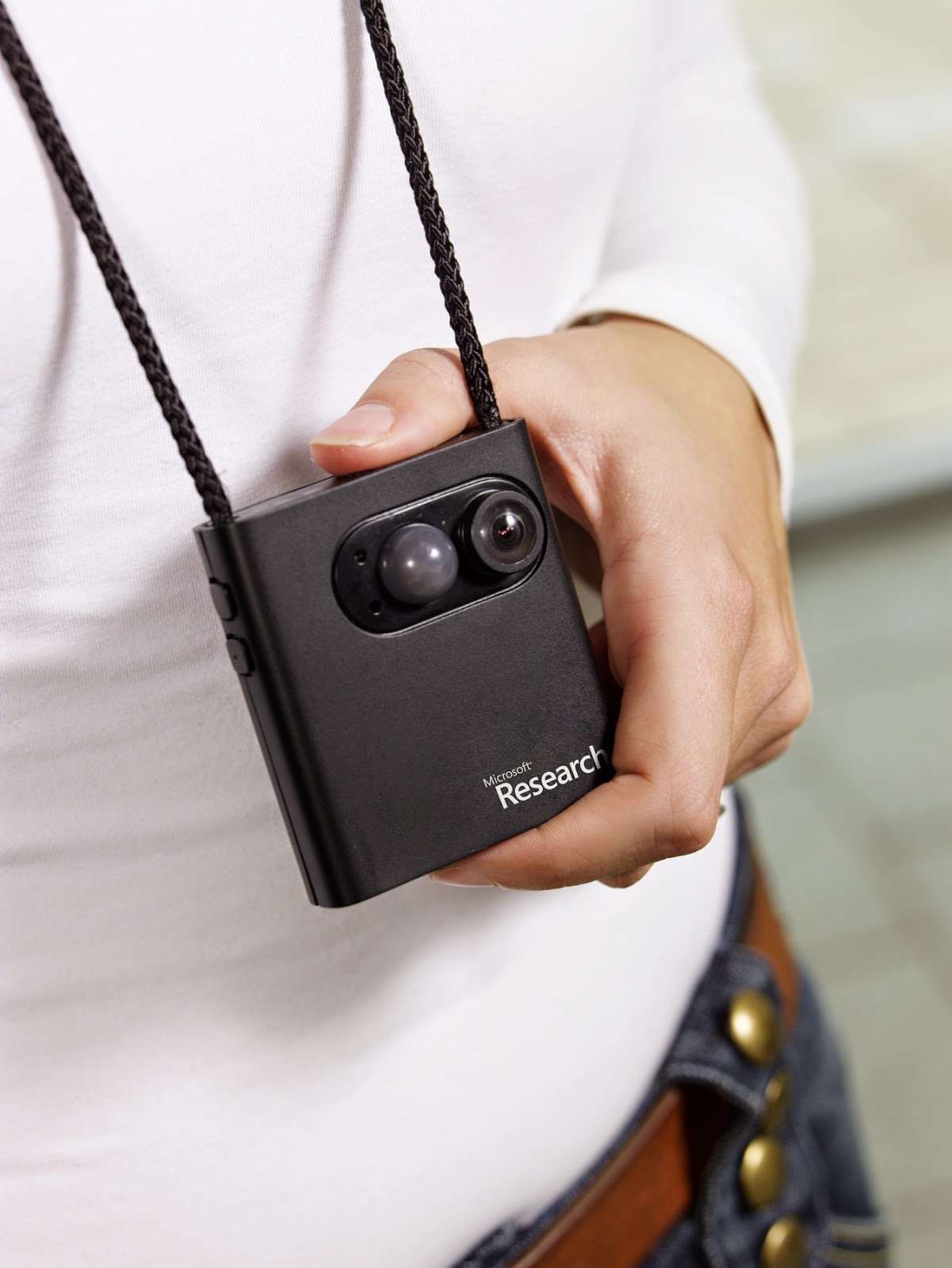
The only comment that comes to my mind about automated vision is 'Life Logging'  devices where an automatic camera you carry across your neck documents your life by taking a picture at intervals, according to some pre-programmed software and sensors, activated by differences in light and shadow. 
Later a computer program then assembles the separate instants or angles in something meaningful - that is very close to some ideas of Conceptual Art. 


Life Logging was originally a Microsoft Project in Cambridge, UK, for helping patients with Brain Injury to recover language and memory, but it also became an activity in itself. Total Recall you might dub it. 

As you see a lot has been put on the table. We have just began to unravel a paradox, that we must leave the details for the next episode.
Is it the end of photography? I hope not.

 I hope that you don't think I am over-intellectualizing. I think that Photography as Art and mass shooting are both a reality, so why avoid one for the other? 
One of the contentions above however is that machines are replacing the act of seeing, by their own.

I am hardly there. In my simple daily life in Rome which I keep documenting, starting from my multiethnic neighborhood, it as relatively simple to have the pulse of globalization by doing environmental portraits of my neighbors. As the local saying goes, you hardly see an Italian in the streets, or on busses now. All the easier then for me to give an image of Rome as a global city or better, a global village. In the future the population will be an ethnic mix, hybridizing cultural traditions, so why not start now to document the fusion?
I wonder often how my Chinese friends see Rome without my remaining ethno-religious filters. Perhaps Rome will be reborn like when it was Pagan and accepted people from all parts of the Empire with their Gods aka cultures? A polytheistic Rome.

A Chinese friend, by amalric.

And then, is it true that picture is replacing word? That was my assumption about Burroughs pictograms. Certainly we can exchange pics more easily than words across the continents.
Also, with hypertextual blogs such as this one we are watching the onset of this pictographic culture. Does a series of words and pictures related to each other by links and hyperlinks constitute a poem? I once published a Visual book with Poesia Visiva's Adriano Spatola, and that was certainly his assumption. Pictograms do replace words, and that is how the hieroglyphic first language was born in the heart of the Sahara desert, more than 5000 yrs. ago. 

The Swimmers' Cave, rock paintings in the Western Desert, by amalric. Messages about the presence of water were the first pictograms.

 'Nadja'  was only a first example of what could be achieved. It is a prose poem, not only for its links with the Unconscious but also in a formal way. Because words resonate in the pictures, and the pictures in words. This I would certainly like to explore further with your help.

Note

May I remind you that I welcome your contributions, both in words and pictures - especially in such wide ranging subjects? Please use the e-mail box to get in touch or to send material.  

Last, David Bate, forsees that Photography might evolve in the direction of a New Realism, even of Italian Neorealismo, which is certainly very close to my own photographical stance, therefore I wrote about poet and film maker PP Pasolini. Perhaps stepping back from overprocessing might be a first move. 

Wednesday, 9 April 2014

Nadja, or the Surrealist City.


When Andre' Breton starts to write his illustrated short novel 'Nadja'  in 1928 Paris still looks very much like Eugène Atget had documented it: quite drab and deserted, very far from the dizzy atmosphere of Tolouse Lautrec, and the pageant of the Crazy Horse, and the Belle Epoque.

 WWI and its millions deaths had transformed and emptied the suburbs and the neighborhoods of the poor. Among the opening pictures in Nadja is that of a statue, a military called Eugène Dolet, of which Breton says that it both attracted and repelled him. 


To the reader the authoritarian statue  seems very much in contrast with the poetical style of writing, except that perhaps it establishes some ominous expectation which is in contrast with it.

Breton uses a symbolist style of the earlier generation of poets, Mallarme' and Rimbaud, but the photos are  describing an ordinary stroll in Paris, and the reader/onlooker expects something to develop out of the contrast. The next photo is 'Bois & Charbons' the picture of a ordinary shop of wood and coal, but with a cavernous aspect, as if an ogre dwelt there.

Breton is establishing a net of personal meaningful places that defines both a theatre set for the novel, and an interior landscape where an action is going to take place.
At first it will be the meeting with an actress friend who relates a lurid, Grand-Guignol show Les Detraquées, (The Cranks) based on serial assassinations in a college of young girls, made by the head mistress, with the complicity of her lesbian friend. Again the reader is shown the picture of a real scene.


Here again photography is used to confer reality to what might otherwise seems a series of fantasies. But in so doing the text  establishes the city as a country of imagination, where one can expect both crime and love. 

The surrealist group headed by Breton was soon to use the camera as a mechanical artifact to play with chance and evoke the unconscious. Man Ray used cut ups and 'rayographs'  made directly on sensitive paper in the  darkroom. William Burroughs and Brian Gysin later invented the Dream Machine projecting  hypnotic rays of light. The Camera Obscura saw its uses expanded . Here, however, it is used used in a simple mimetic way, but in an enigmatic way, in relation to the text.

Back to the novel, Breton progresses to a fleamarket where he finds a strange phallus-like white sculpture with coloured lines, which he later understands to be a three dimensional statistic of a city. It's a typical 'objet trouvé',  whose meaning has been displaced by the mind in a perverted way - he says. It is the birth of Détournement, symbolic displacement, which will have a central role in Surrealism, when becoming deliberate.


In fact the poet is establishing his own inner theatre where  a momentous happening is going to take place. In the street he crosses and stops  an attractive blonde with an unfinished make up, and a poor dress, who expresses herself by riddles: Nadja "whose name in Russian means hope, but it only the beginning of it" she says.

By coincidence Breton just a moment earlier was thinking of the Russian revolution, but also noting that ordinary work, that of the people leaving the offices, had very little to do with imagination. 

Nadja, who is looking for work,  nevertheless appears as a  messenger, the Angel of Revolution, coming to drab Paris, as if she had wanted to meet in person the poet, instead of being stopped by him.

It is as if there was a collapse of the inner expectation and outside reality,  between the subjective and the objective, which is brought about by desire.

Of Nadja however we will know little of her external appearance.  Instead we get some riddles  and some extraordinary drawings that she gives to Breton. 

They are the  the  token of her visions, like a flower  with a double set of petal-eyes, a symbol of inner beauty and  Love. "la fleur des amants". 


 Nadja is  a seismograph, telling Breton  she sees him as being drawn to a Bright Star, which is like 'the heart of a flower without a heart'. Breton is very moved.

Later  we learn that Breton, who at the time was married  had at the same time an affair with the actress Blanche Derval who had played in the Grand Guignol piece mentioned earlier in the novel. 

Of her we have a portrait,  which acts like a more material incarnation of Nadja. It is as if a photo, an objective correlative, wouldn't be able to catch Nadja's otherworldly nature. So the  portrait of Blanche must act as a displacement of Nadja. Breton compares the makeup of the two women, mentioning that one is too light for theatre and the other too heavy for the street -  and so makes an equivalence.

Nadja instead is only evoked by her  her 'regard de fougère' her 'fern look' while she meets the author in  ominous places, like the Sphinx Hotel, or the square of the Mazda Light billboard. 


She draws the author as a fierce cat with flaming hair and folded eagle wings along the sides, and herself as Melusine, a water nymph, whose lower body is made by a fish tail. It is clearly a figure of the Unconscious, but also of European legends. Melusine predicts the future and is a fairy queen of the inner world.


We are given  some other drawings of Nadja, : Le bouclier d'Achille, le Reve du chat, le Salut du Diable.
The drawing here at the top of the post, will be used as a cover for the book - it is the portrait of a  a fortune teller, a seer who is perhaps Nadja herself.

 Indeed she is able to interpret correctly some of the most complex paintings by De Chirico or Max Ernst, which hang at Andre's home.

 The drawings of Nadja operate on a different level from realistic photographs. They are 'apparitions', dream-like material of the Unconscious. Photography however documents them as real as the Paris' statues.

Some, like Le Reve du Chat,  a fugitive cat with the tail held by the wick of an invisible oil lamp (The Lamp of Wisdom?) , are cut ups of ordinary appearances  united in a paradoxical way, which suggests a further meaning. Cut ups  were to become typical of Surrealist art, as in Man Ray or Max Ernst.


Ordinary life reclaims  its rights, however.  The way Breton and Nadja separate each other only after a few days of acquaintance is an object of comment by  Katharine Conley's The Automatic Woman. Not only was Breton married, but he also ignored that Nadja was mad. Suddenly we are reminded of the stark facts of life.

Nadja was to return to the province she came from, Lille, presumably to solve her money problems, but was instead hospitalized.. When Breton discovered it he simply mentions that the hospital  probably did her more evil than good, by making a prisoner of her.

She had made him a seer and confirmed him to be an artist with a higher destiny, (The Bright Star)  but he never took the trouble to go and visit  her, preferring to make her the central character of a novel which was an immediate success - Conley comments sardonically. 

In an amazing displacement  of desire, Breton  shows instead of Nadja a portrait of actress Blanche Derval, who differently from Nadja, was resisting  his desire. The reader will never know what the real Nadja looked like.

Curiously Blanche in the Detraquées  abducted  an innocent schoolgirl. But it is as if Breton who performed an Identity Theft by substituting portraits.


Now, what is my relationship to surrealism? Although I am rather Post-avantgarde, and therefore eclectic, Surrealism is part of my culture, especially in the sense of Psychogeography: I am driven both by uncanny and the Sublime, but also the very simple, and the unexplainable.

I met some of the last surrealists, like Arturo Schwarz, the critic and collector of Marcel Duchamp -  I invited to Rome William Burroughs and Bryan Gysin, the writer and artist friends, who invented the Dream Machine. I missed by a hair Francesca Woodman, the photographer, who had sent me an illustrated postcard of her. They all switched a trigger, by alerting me to the imagination gap in Realism, which is the current ideology in photography. Any image is more than what it purports to be.

There is a photograph in 'Nadja' of which I have by coincidence a precise equivalent: Breton says:  'Devant nous fuse un jet d'eau, dont elle parait suivre la courbe'. 'Before us springs a water jet, whose curve she seems to follow'


 What is the attraction they have in common? To me they are both mimetic and enigmatic, although they lack the optical tricks of later Surrealist imagery.

The conclusion of the book is Breton's famous sentence, which seems a sad epitaph to Nadja's madness: 'La beauté' sera convulsive ou ne sera pas' 'Beauty will be convulsive, or will not be at all'.

Strangely the closing photo of  the novel is that of Becque, another authoritarian military bust in a square of Paris,  like the one in the beginning of the book. It is as if the drab postwar reality had reasserted  its role, by closing the doors of Imagination. Hence beauty must be convulsive, to shake off  the smothering  of Repression.

That was a lesson learned by the time of the revolution of May '68, when the walls of hospices crumbled down, and imagination was again 'au pouvoir'.
Sexual liberation met social criticism, as it had done first in the Surrealist Movement.

It took more to liberate women, however.  That is why it will be interesting to dedicate another post in the future to Francesca Woodman, the 'Rimbaud of Photography', who used her own body to create surrealist photography in the 1970s.

Notes

 According to the legend Melusine can't be watched  in her private rooms possibly because of her animal  fish tail.  Her noble husband who peeps at her while she begets her three daughters. will be punished by them, and be prevented to reign.
I recently learned with surprise that Melusine was the begetter of the House of Lusignan, kings of Portugal, and of the two kings of Jerusalem, Amalric I and II, of whom I carry the name by mere chance. The  nick had attracted me, for no other reason that it was neither English, nor Latin.
  So it is again a strange coincidence that I was to cross the path of Melusine, such a strong protectress of imagination.
A Melusine  was also Queen of Cyprus, which she defended successfully against  the hordes of Saladdin's sons in the 1400s. She was reputed as a beautiful, cultivated woman.

In the end, despite the efforts at occultation of Breton, a family portrait of Nadja (Leona Delcourt) has finally been unearthed in 2009 by her biographer, HESTER ALBACH.

Here she is:


She was indeed a sweet child, with 'un regard de fougère' - and yet a 'force multiplier' for the Surrealist Movement.The finding of her portrait settles the debt of the first visual novel of Modernism.

Tuesday, 4 March 2014

The Hieroglyphic Silence


William S. Burroughs  (1914 - 1997) was a writer pioneering non verbal experiments like the cut up, in writing, in movies and in recordings.


I invited him in Rome for a Poetry Festival in 1979, and translated him on stage. Some of his concepts still stay with me, like that of Hieroglyphic Silence, the silent center of perceptual experience.

He relates Hieroglyphic Silence with the birth of the Egyptian Language, which was born in the Western Desert in Prehistoric times, by the way of simple images.
I visited the very places where the first water pictograms were ever drawn,  a stretch of deep desert  near the Egyptian-Libyan-Sudan border.

Processes like double exposure, the Lartigue Effect and chance encounters  I relate with the split between the signifier and the signified which is at work as well in a photo as in a word. The silent core of the Unconscious from where primal experience springs in dreams.

Burroughs knew about the split from the linguist  Korzybski, well before  it became paramount to photography  when Barthes introduced Photograpy to Semiology in his 'Camera Lucida' (1980).

Here are two WSB pieces about Hieroglyphic Silence which I find quite relevant for Experimental Photography.

Pictograms indeed are a very old device by which the Ancient Egyptians began Reportage, mixing it with a fair dose of Magic. This Burroughs had to say in an interview by Conrad Knickerbocker:


INTERVIEWER
You seem primarily interested in bypassing the conscious rational apparatus to which most writers direct their efforts.  
BURROUGHS
I don't know about where fiction ordinarily directs itself, but I am quite deliberately addressing myself to the whole area of what we call dreams. Precisely what is a dream? A certain juxtaposition of word and image. I've recently done a lot of experiments with scrapbooks. I'll read in the newspaper something that reminds me of or has relation to something I've written. I'll cut out the picture or article and paste it in a scrapbook beside the words from my book. Or, I'll be walking down the street and I'll suddenly see a scene from my book and I'll photograph it and put it in a scrapbook. I'll show you some of those. I've found that when preparing a page, I'll almost invariably dream that night something relating to this juxtaposition of word and image. In other words, I've been interested in precisely how word and image get around on very, very complex association lines. I do a lot of exercises in what I call time travel, in taking coordinates, such as what I photographed on the train, what I was thinking about at the time, what I was reading, and what I wrote; all of this to see how completely I can project myself back to that one point in time.  
INTERVIEWER
In Nova Express, you indicate that silence is a desirable state.  
BURROUGHS
The most desirable state. In one sense a special use of words and pictures can conduce silence. The scrapbooks and time travel are exercises to expand consciousness, to teach me to think in association blocks rather than words. I've recently spent a little time studying hieroglyph systems, both the Egyptian and the Mayan. A whole block of associations—boonf!—like that! Words, at least the way we use them, can stand in the way of what I call nonbody experience. It's time we thought about leaving the body behind.  

Out of body experience were of course related with death and reincarnation, the main social event in Ancient Egypt. Burroughs attempted a description in this section of   The Third Mind, 1977):

http://biblioklept.org/2010/11/07/a-selection-from-hierogylphic-silence-by-william-s-burroughs/

“I am the Egyptian,” he said, looking all flat and silly, and I said: “Really, Bradford, don’t be tiresome.”
All right, let’s put it apple-pie simple with a picture of a wedge of apple pie there, containing fifty-three grams of carbohydrates.(See the L-C diet.)
Well now, if you don’t know the word for apple pie where you happen to be and want it, you can point to it or you can draw it. So, when and why do you need a word for it? When and why do you need to say, I want apple pie, if you just don’t care how fat you get?
You need to say it when it isn’t there to point to and when you don’t have your drawing tools handy\ In short, words become necessary when the object they refer to is not there.
No matter what the spoken language may be, you can read hieroglyphs, a picture of a chair or what have you; makes no difference what you call it, right? You don’t need subvocal speech to register the meaning of hieroglyphs. Learning a hieroglyphic language is excellent practice in the lost art of inner silence. “It would be well, today, if children were taught a good many Chinese ideograms and Egyptian hieroglyphs as a means of enhancing their appreciation of our alphabet.” If you are able to look at what is in front of you in silence, you will be able to write about it from a more perceptive viewpoint.
What keeps you from seeing what is in front of you? Words for what is in front of you, which are not what is there. As Korzybski pointed out: whatever a chair may be, it is not a “chair.” That is,it is not the label “chair.” 
So, now try this: pick up your Easy Lessons in Egyptian Hieroglyphics, by Sir E. A. Wallis Budge, and copy out the following phrases:

p. 104; They fall down upon face their in land their own.
p. 173; Stood the prince alone in the presence of the gods.
p. 181; The lock of hair which was in.
p. 79; the wind
p. 202; Giver of winds is its name.
p. 190; coming forth waiting for thee from of  old
p. 200; night that of the destruction of the enemies
p. 208; come thou to us not having thy memories of evil come thou in thy form
p. 103; In the writing of the god himself he writeth for thee the book of breathings with his fingers his own.
p. 195; Shall it be that thou wilt be silent about it.

Now, having memorized the above passage, turn to the hieroglyphs on the following page and read in silence.


(N.B. You might liken this blog to a photomontage where the chunks of text work like pictograms freely associated to the photographs. They might recur in the future in different associations - the same way one walks the same streets but sees different things in new associations - see Psychogeography).