Showing posts with label photo. Show all posts

Monday, 28 July 2014

Sigma Quattro: just like a View Camera


Long ago there was a time when no pro would do without one, a View Camera, with its black cloth. Then a format de-escalation began in the 1940s, 6x6 became the dominant format, and finally the 35mm.
With digital we are going  even smaller, with APS becoming the dominant format..
 I would never have seen an old style view camera if my cousin, a good woodcarver, had not built one in wood. It took a big prime lens with a Compur shutter, it focussed on its large plates by moving an optical bench, and you could even make collodium plates for it, by painting the emulsion on a glass plate. The camera had its own tripod, it needed poses, it took time to change plates, but it  had v. good resolution and was good for all sorts of experiments.

A Lotus view camera  from Linhof
In the Digital era, the Sigma Foveon cameras take more or less the same niche although they have an APS-C sized sensor and weigh only half a kilo instead of the 10 kg of view cameras! They also have a double resolution to their nominal photosites, compared to another digital camera.
The difference is in the structure of the sensor. Instead of a flat matrix of blue, green and red photosites, they have three layers that convey the full colour information.
See here:


In the Quattro Sigma improved on its older sensor so that only the top one, the blue one carries the luminance information. Therefore the structure is called 4-1-1, instead of 4-4-4, and hence the Quattro.

With the new arrangement there are less photosites in the  colour layers below,  but bigger ones, hence they produce less noise. The advantage of the Foveon  indeed is not in the number  of photosites, but in their pixel sharpness.

The new arrangement is better than the old in that it now offers a 36 Mpx image equivalent, instead of the Sigma Merrill's 30 Mpx. on the same APS-C sized sensor.

This is yet another proof that resolution nowadays doesn't depend on the size of the sensor and even less from the size of the camera.

For the technical savy, see the discussion about the new sensor between the Sigma engineers and the Imaging Resource team is here.

There have been other improvements in respect to the old Merrill. Although the camera still takes some 4 secs to be initialised, it  records faster (2.8 seconds/shot), it focuses better (less than 1 sec), battery life however is still short, at 140 shots. Sigma provides a second battery.
 It has no video, so you must know what you buy it for :)

But the real progress is in the sensor, which now offers 25% more resolution than the earlier dp2 Merill, and one stop more useable sensitivity, up to 800 ISO.
I would say this is the consensus, although the level of appreciation varies wildly across reviewers.


These are early times, but I decided to try a review (of reviews!)  after seeing a double blind test at Les Numeriques comparing the Quattro, a Sony A7r, and a Leica S. There is no doubt, according to the users' vote,  that at base ISO the quattro beats the Sony and leaves the Leica far behind! See here

From the Sigma gallery
As soon as the ISO is increased though, the Sony is far better.
Yes but it also costs twice the price of the Sigma, the latter being € 850 or $ 1000 (note that Sigma uses a more sensible exchange rate for the EU than other brands). Note also that an APS-C sensor, can beat a FF one: a first.

Among the Cons, apart from the slow reactiveness of the camera, there is some colour smearing (between blue and yellow), which will probably require a firmware tuning, and a loss of detail in the red - see the Imaging Resource's samples. RAW however gives better results, proving that these are teething problems of the Jpeg processor.

One of the most contentious issues is the camera shape itself.
It is oblong, absolutely in a shape of itself, with its general thinness but fleshy grip. Sigma was daring and I don't know how much it will be liked by reactionary audiences of the kind dSLR-or-Death :) One needs to be eccentric from time to time.

The fact is that it is a 36Mpx equivalent camera, and if you don't hold it properly, they are going to be entirely wasted by handshake.
So here is a uTube video which might convince you of the good sense of the revolutionary shape.

My take is that this is a Landscape perfectionist's camera,  and one will use a tripod most of the times. Note that the button layout and the menus are very rational. You have a focus button on the grip. As you see there is no EVF, and some have complained that the LCD is too reflective. Sigma however provides a 45mm optical VF. On a View Camera you had to watch the image on a layer of glass in the back of the camera, so again there is something in common.

The Quattro has been called a niche camera, and is very simlar to a View Camera in that it offers beautiful, ultra detailed panoramas. In my setup it could probably supplement theOlympus E-M5 for the most taxing landscape views. Note however that the Quattro is a daylight camera, contrary to the E-M5.

I invite you now to see what a landscape artist can do with the older Sigma Merrill and the foveon sensor, here at THE.ME

http://www.the.me/japan-autumn-leaf-viewing-mount-fuji-the-sony-a7r-and-lots-of-legacy-lenses/

I am quoting Karel Van Wolferen and its Japanese Mountain views, which offer an unheard level of detail in foliage. Note the Fuji mountain in the background.

copyright Karel van Wolferen (fair use)
The article was written to illustrate the Sony A7r, and the Foveon was used only for comparison, but IMHO it beats the Sony A7r, for its 3D effect.
Of course if you need the higher sensitivities there is no match with the Sony, which can also change lenses. But as a niche camera the Quattro is probably unbeatable! Its Sigma 30mm, an outstanding lens for resolution which I use with the E-M5,  is clearly optimised for the Foveon sensor.

As you see Van Wolferen has also a taste for composition in Landscape that can rival the Japanese masters. I am not surprised that the uses a Sigma. I am tempted too! That foliage is extraordinary. The more you magnify, the more detail surfaces up from the background. It's like having many pictures in one.

copyright Karel van Wolferen (fair use)
In some cases it makes more sense to have separate cameras for different uses, instead of having a jack-of-all-trades.
So will you, or did you buy a Quattro? The camera is just out. Let me know what you think about it, in daily use. 

Note

As always if you want the original resolution, control-click and open the picture in a new page.

For some reason just clicking on the image opens a smaller image.

Check also the video at the CameraStore.
They don't like the grip, but at the end of the video they do some prints showing a comparison with the Merrill to advantage.

Also Sigma has just announced a FW upgrade.


Friday, 20 June 2014

Maverick lenses - the Panaleica Summilux 15/1.7 for m4/3


It is an Urban Legend among m4/3 users that no matter what, Panasonic and Olympus don't succeed in making a sharp lens around the the 17mm (35 mm eq.) focal.
It seems that the legend is now hitting again the prestigious Panaleica 15/1.7.

DPR readers complained that the Oly 17/1.7 was not sharp enough, and now a comparison at DxOmark is showing that the Panaleica, while a bit better, is not by much. 
Note that the lens is not exactly cheap: some 600 USD, and 620 Pounds in the UK! It does have a very pretty bokeh, a nice colour and tone signature, it is resistant to flare, but  the Sharpness or Death Gang are deaf to these niceties. OTH commercial sites are waxing lyrical:

Photography Blog review

But, well, they are commercial sites.

Note that at the edges of the 17mm, the Panny 14mm/2.5 and the 20mm/1.7 have no such problems, they are considered very sharp by the same crowd.
IMHO user samples speak for themselves. From a DPR user, Zilver, the 15mm at 1.7, and 4.0 respectively (open the piccie in a new page to get the larger shot):
Check the foliage in the foreground and compare with the buildings in the backround, especially at the edges. There is a considerable difference between the two shots. 


The problem seems to occur at infinity, less so at short distance. See this pipe pictures at DPR by Eastvillager:

here f/1.7 is OK. Curvature is less important in the center, and at close range.
So what happened? Both in the case of the Panaleica 15/1.7, and in the case of the Oly 17/1.7 curvature problems have been mentioned by the reviewers. That points a finger to firmware correction being insufficient.
Let me explain the general case. Lenses are curved, and thus give a curved image, but their projection on the sensor must be rectilinear, as in a Mercator Map, reflecting a Globe.

You have two ways of doing that: to associate a concave lens to the convex main one - to simplify things.  Or to use firmware correction, like you do when you want to straighten a fisheye. That is exactly what happens in my 14/2.5. 
I remember a reviewer showed that the FOV before correction is 11mm (in RAW) and narrows to 14mm after correction. 
That means that edges have been cut away by the manufacturer because they were fuzzy.  See the m43photo review of the 14mm.

In m4/3 the problem is compounded by the short Distance to Flange, which gives less elbow room for correction, the geometrical problem being more severe.
Finally this gives me a cue about what might have happened. With its high optical standards Leica might have imposed to Panasonic to use as little firmware correction it could.

As a result, to keep the lens small Panny left some geometrical distortion uncorrected. I say this because the same has been argued about the Oly 17/1.8.  If you look at the edges, it's not that the pixels are distorted, but they are out of focus! That is to say that because of geometrical distortion in a WA you cannot have both the center, and the edges in focus!

Now the ideal of the old 4/3 was always to be 'even across the frame', but the distance to flange was double what it is in m4/3. More restrictively, they never attempted to go below f/2.0.  With a wider aperture,  focus problems increase.


The Panny GX7 with the new Panaleica 15/1.7. Yummy!

To get back to the Panaleica 15/1.7 there is no sharpness problem at f/4, but there is one at 1.7, at the edges. Close range is OK.  So what does it tell about the use of the lens? 

The 30mm eq. should be fine for Street Shooting. It should be fine for low light Interior Portrait shooting. Its good bokeh should be nice for the occasional flower, but it's not so good for Landscape, unless you stop it down.

This in my view is a minor letdown, but certainly I won't sell my ultrasharp 14/2.5 (see shot in the post above), nor my Sigma 19mm/2.8 which is quite sharp full open. 
I bought both for a song, I am v. happy with them.
If I didn't have them, then perhaps I would consider the Panaleica 15/1.7, but mainly for its lovely colour and tone signature. My lenses are less filmlike in their results, more digital, although I can use Olympus art filters to overcome the coldness of digital rendering.

Sharpness for me was never a fixation. Good to have, but not decisive. As HCB famously said:
"I'm always amused by the idea that certain people have about technique, which translate into an immoderate taste for the sharpness of the image. It is a passion for detail, for perfection, or do they hope to get closer to reality with this trompe I’oeil? They are, by the way, as far away from the real issues as other generations of photographers were when they obscured their subject in soft-focus effects." -- Henri Cartier-Bresson

Reviewers say that the lens  is well built in light metal, and that the aperture ring is a godsend, but only on Panny cameras. With Olympus it doesn't work. m4/3 is a Standard of sorts - oh well...

Post Scriptum

 Jordan Steele whose opinion I value has a different explanation, here, after looking at  the differences between RAW corrected and uncorrected images, which I didn't do. 

 He argues that indeed the lens has a lot of curvature and that the fuzzy edges are due to over-correction by FW. The conclusions are much the same, although the reason is different. Panasonic dealt with curvature, the same it did with the (now) much cheaper 14/2.5 pancake.

I still think that Panny should have ignored bokeh requests, and make instead an f/2.8 outstanding lens.

Saturday, 31 May 2014

A docudrama about the short life of the photographer Francesca Woodman

This is an interesting docudrama without a title put on air at Artè TV in 2007, and directed by Jérome de Missolz,  true to Francesca's biography. It shows  well how she shot some of her best pictures. The French actress looks very similar  to Woodman, although she is a brunette, and speaks French in the film. Perhaps you can use a Skype live translator, when it comes, end of 2014

There are some factual inaccuracies, since she is using an old Exacta 6 x 6, instead of the Speed Graphic, or the Rolleiflex, she was known to use.

It is not v. probable either that she went to bed with her Italian dealer , who is here represented as an old man, while he was almost the same age of her, and provided with a jealous fiancée :)

The lesbian scene I don't know about it either, and the locations are rather abstract. Why make her a sexual maniac?  Perhaps we might make one day a better follow-up, by looking in her motivations as an artist.

The docudrama was ordered and broadcast a long time ago by a public TV, so I am told that  there is no harm in downloading it for private use. It lasts 70 minutes, and is some 250 MB, in the Mpeg4 format (Quicktime).

Be aware that when you click on the link,  the download page might be below a pop up Ads page, or in the page before that:

Or you can try a direct download here: 360p

Enjoy the movie!

The opening quotation reads: 'Je est un autre' - Rimbaud. 'I is Another'


Note

Despite  the interesting placements of the actress in front of the camera, I think that finding visual metaphors and making them into emblems,  is still a matter of hard thinking - like creating a crossword, if you wish.

I am told that the young actress was a beginner model, who enjoyed to stay on the other side of the camera. Francesca, liked both sides, but had to toil in order to achieve the right composition, since there was nobody in front of her.


And now an original F. Woodman's contact shot to compare :)


Friday, 16 May 2014

Globalization, last stop?


The Sun obelisk at S. Giovanni, came from Egypt by the sea under Augustus, 2000 yrs ago. First example of Globalization, by amalric


Although I have followed roughly a chronological order until now in my enquiry about photography, there are some gaping holes. According to David Bate it goes like this:

1870-1910  Pictorialism
1920-1930s Avant-Garde/Modernism (Formalism)
1945-1960 s: New Realism/Humanist Photography
1960-1979: Minimalism, Conceptualism/late Modernism
1980-1990s: Postmodernism/Neoconceptualism


What comes after goes under the name of Globalisation, rising with the spread of the Internet, the WWW and the Social Media.

To complicate things we might have a different perception on how and when Photography became Art on the different sides of the Pond. I recently had a quarrel at DPR with an American reader that supported the idea that this had happened very early in New York. I checked, acceptance of Photography started at the old MOMA in 1940 with Edward Steichen and Beaumont Newhall. 
Indeed I am not very familiar with American Naturalism/Realism. The MOMA might have made Photo exhibitions very early , but was it considered High Art at all? Surely not in Europe.

In Europe, for all I know it happened less than 20 yrs. ago. David Bate reminds us that the Tate Modern Art in London didn't accept Photo as Art before 2003. He mentions that Conceptual Art was the Trojan horse, since it heavily relied on Photography. both for documentation, and as a means for the dematerialization of the art object.
So if you accept their photography, someone asked, why not accept photographers in the first place?

In my discussion at DPR many users were not interested in Art at all, for them Photo. to be a craft practiced with enthusiasm, is well enough. Although I concur, I hope I showed with Francesca Woodman and others that Art is much more potent vehicle of ideas and world views. It is really facing reality as adults, not children. It is not 'Pets & Brats', although that might be the main reason for people to buy cameras - if they don't use their phones at this point.

All this preface to explain that there is an important  gap before Globalization, and it is Conceptual Art because that opened the Museums doors to what had been considered before a minor art, a low art. 
Now the paradox is that the successive stage risks to plunge Photography again in the shapeless stage and the unmeasurable we experiment every day in the Social Media. Is Photography over?  this what they are currently debating at the Winterthur Fotomuseum. They are simply too many billions of images around, they note, and expanding. by hundreds millions every day!

In the beginning Globalizaton mostly  coincided with the very History of Photography. The first reportage ever by Roger Fenton was from the War of Crimea in 1850, and after that there was no colony in Africa and Asia that was not documented for the metropolitan public by early explorers and administrators.

Roger Fenton - a British hussar in Crimea

Photography was thus an important medium for the occidentalizing of the rest of the World. By the same token these populations learned to see reality with Western eyes. This process is still going around,  Western perspective being built in every camera, but world wide photo sites like Flickr or 500px are also showing different visual traditions emerging, as I showed in Chinese pictures here and here.

Curiously the first self-conscious attempt at establishing a universal visual  as part of a globalized culture was again at the MOMA, in 1946: The Family of Man, curated by Edward Steichen. 500 reportage pictures aimed at demonstrating that Men's lives were the same across the Planet: family ties, birth and death, the toil of work and other commonplaces that are effectively common. One glitch occurred when one black protested at the American embassy that blacks were misrepresented as the only ones shown famished and destitute - and so the relevant images had to be withdrawn! 


The Family of Man.

So much for universal humanism. This was only the onset of some of the problems we are facing now despite de-colonization is completed (not in Russia, with Chechenya though, or in China, with Tibet).

Let's do a sudden jump to 2014. The digital revolution  starting with the beginning of the New Century, and marrying the power of computer networks to the digital camera, spread a planetary web, which made the little world of paper of photography and newspapers pale in comparison. Or even irrelevant: we know that century old newspapers are firing their photographers, because they find more interesting  the illustrated twitters of citizens' journalism.

Part of the revolution is Facebook, with its billions of images, But also stock agencies like 500 pix that has photographers from more than 200 countries, and 2 million of highly selected images. 
All is well? The Advent of Photoshop has resulted in the majority being highly corrupted versions of reality. 
Read Ming Thein gloomy article on 'Illusion vs delusion vs reality: commercial photography today'. Advertising customers want beautified images of their products that don't exist in reality.
Moreover can you ever hope that your images will be selected with such a million wise competition? In these social sites you must apply the principle: you scratch my back and I'll scratch yours, to accumulate likes, and 'follows'.  OTH you have to tag accurately each of your images hoping that some computer looking for keywords will match exactly yours. 
I dialed 'Rome' and lo, what an amazing lot of wacky images of the Forum, and dramatized Coliseums. Fake images that might have come from Las Vegas, or another planet. Worse: Fake lights and colored filters that were never there in the first place. Ancient monuments redesigned as lurid backgrounds for promotional campaigns.
Pantheon- courtesy Smok

Besides what control have you on your own images?I suspect that my piccies at flickr are regularly ransacked by travel agencies to show their customers what their destinations look like, because some days the Views count jumps up suddenly by the thousands, and travel companies have been caught red handed before.

Is it what makes some Museum curators say that Photo is dead? 
Trevor Paglen, a visual artist from NY, has this to say at the Fotomuseum site:

"In the first instance, the rise of digital photography and image-processing software has fundamentally altered the craft. Digital cameras are cheap and ubiquitous; image-processing software (whether on-camera firmware or applications like Photoshop and Instagram) has made it extraordinarily easy to produce an image-quality that was previously only possible with years of specialized  training in equipment, shooting technique, and printing methods. The de-specialization of photography is an area of much concern among curators responsible for sorting out what’s worth paying attention to, and to practitioners who’ve seen their ability to make a living get much, much harder (witness the near collapse of photo-journalism as a profession). In this sense, perhaps the advent of digital photography and automated image-processing means that the traditional craft of photography is largely “over.”

IS PHOTOGRAPHY OVER?!?

A toy piccie, from Lomography, NY.

Trevor Paglen:

"On the cultural side, the digital “revolution” has meant an upheaval in the photographic landscape. What is the place of photography in society when there are now well over 250 billion photographs on Facebook (with an additional 350 million added daily), where the average person sees over 5,000 advertisements a day, and where photography has come to inhabit the very core of our “technological a priori.” 

"Photography has become so fundamental to the way we see that “photography” and “seeing” are becoming more and more synonymous. The ubiquity of photography is, perhaps ironically, a challenge to curators, practitioners, and critics. Why look at any particular image, when they are literally everywhere? Perhaps “photography” has become so all-pervasive that it no longer makes sense to think about it as a discreet practice or field of inquiry. In other words, perhaps “photography,” as a meaningful cultural trope, is over."

A Turner Prize photographer, Wolfgang Tillmans, proposes that picture taking is so pervasive that it is replacing words:

"Something interesting is happening: pictures are replacing words as messages," Tillmans says of selfies and restaurant Instagramming. "You could trace these elements to work I did 20 years ago, and obviously I am not responsible for that, but that sense that there is some significance in a piece of clothing on the floor. I cannot bitch about millions of people who photograph their food. But I didn't photograph plates or still lifes to show my friend: 'Look! I've just eaten this banana!'"

Falafel - courtesy giff constable

This I find interesting but in a different sense: the advent of Pictograms, that William Burroughs had predicted. It is easier to connect across cultures and languages with images and movies. It is also the reasoning at the base of this blog.

In a further post at the FotoMuseum blog, "Seeing Machines" Trevor Paglen makes a daring hypothesis:

"Seeing machines is an expansive definition of photography. It is intended to encompass the myriad ways that not only humans use technology to “see” the world, but the ways machines see the world for other machines. Seeing machines includes familiar photographic devices and categories like viewfinder cameras and photosensitive films and papers, but quickly moves far beyond that. It embraces everything from iPhones to airport security backscatter-imaging devices, from electro-optical reconnaissance satellites in low-earth orbit, to QR code readers at supermarket checkouts, from border checkpoint facial-recognition surveillance cameras to privatized networks of Automated License Plate Recognition systems, and from military wide-area-airborne-surveillance systems, to the roving cameras on board legions of Google’s Street View” cars.

"What’s more, the idea of seeing machines I’m sketching out here isn’t confined to the imaging devices and systems I’ve described in broad strokes. The definition extends to include the images (or data) produced by such imaging systems, the digital metadata associated with those images, as well as additional systems for storage, archiving, search and interpretation (either human or algorithmic)". 

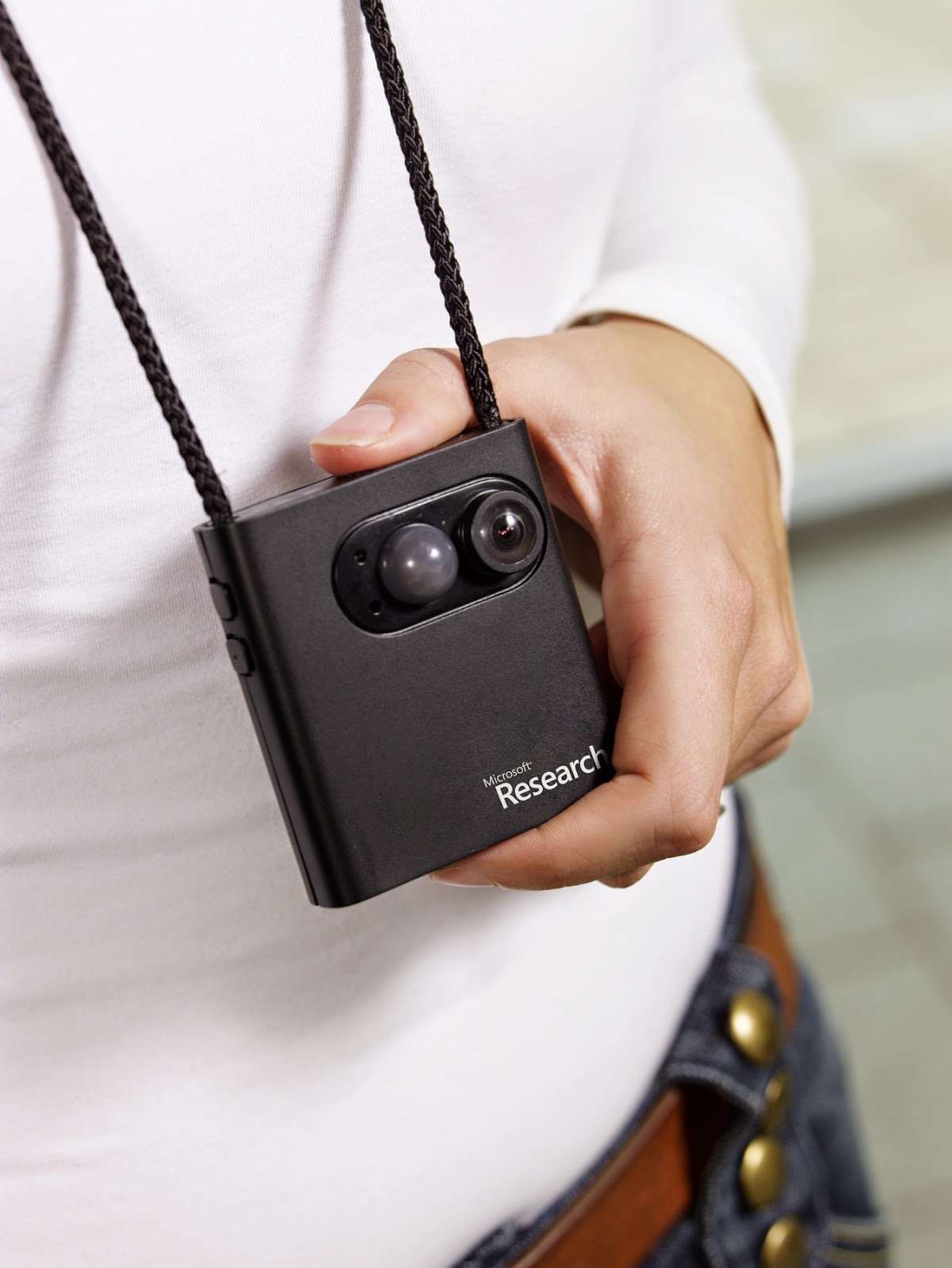
The only comment that comes to my mind about automated vision is 'Life Logging'  devices where an automatic camera you carry across your neck documents your life by taking a picture at intervals, according to some pre-programmed software and sensors, activated by differences in light and shadow. 
Later a computer program then assembles the separate instants or angles in something meaningful - that is very close to some ideas of Conceptual Art. 


Life Logging was originally a Microsoft Project in Cambridge, UK, for helping patients with Brain Injury to recover language and memory, but it also became an activity in itself. Total Recall you might dub it. 

As you see a lot has been put on the table. We have just began to unravel a paradox, that we must leave the details for the next episode.
Is it the end of photography? I hope not.

 I hope that you don't think I am over-intellectualizing. I think that Photography as Art and mass shooting are both a reality, so why avoid one for the other? 
One of the contentions above however is that machines are replacing the act of seeing, by their own.

I am hardly there. In my simple daily life in Rome which I keep documenting, starting from my multiethnic neighborhood, it as relatively simple to have the pulse of globalization by doing environmental portraits of my neighbors. As the local saying goes, you hardly see an Italian in the streets, or on busses now. All the easier then for me to give an image of Rome as a global city or better, a global village. In the future the population will be an ethnic mix, hybridizing cultural traditions, so why not start now to document the fusion?
I wonder often how my Chinese friends see Rome without my remaining ethno-religious filters. Perhaps Rome will be reborn like when it was Pagan and accepted people from all parts of the Empire with their Gods aka cultures? A polytheistic Rome.

A Chinese friend, by amalric.

And then, is it true that picture is replacing word? That was my assumption about Burroughs pictograms. Certainly we can exchange pics more easily than words across the continents.
Also, with hypertextual blogs such as this one we are watching the onset of this pictographic culture. Does a series of words and pictures related to each other by links and hyperlinks constitute a poem? I once published a Visual book with Poesia Visiva's Adriano Spatola, and that was certainly his assumption. Pictograms do replace words, and that is how the hieroglyphic first language was born in the heart of the Sahara desert, more than 5000 yrs. ago. 

The Swimmers' Cave, rock paintings in the Western Desert, by amalric. Messages about the presence of water were the first pictograms.

 'Nadja'  was only a first example of what could be achieved. It is a prose poem, not only for its links with the Unconscious but also in a formal way. Because words resonate in the pictures, and the pictures in words. This I would certainly like to explore further with your help.

Note

May I remind you that I welcome your contributions, both in words and pictures - especially in such wide ranging subjects? Please use the e-mail box to get in touch or to send material.  

Last, David Bate, forsees that Photography might evolve in the direction of a New Realism, even of Italian Neorealismo, which is certainly very close to my own photographical stance, therefore I wrote about poet and film maker PP Pasolini. Perhaps stepping back from overprocessing might be a first move. 

Sunday, 20 April 2014

'Nadja', a follow up.

* Warning: Intellectual stuff! jump altogether if you are not into psychology and deconstruction.

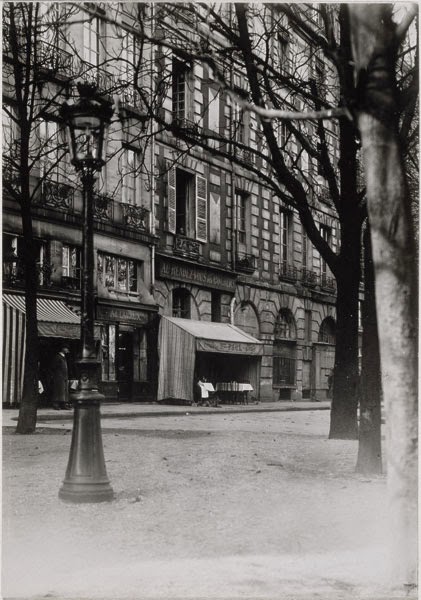
My friend Daniel Jouanisson, videographer, sent me this photo update on the squares of Paris in 'Nadja'. Judge yourself how little they have changed in almost one century!

Hotel des Grands Hommes
How important were those squares for the  the story of Nadja? Here is another interpretation by Critic David Bate, from Westminster University in 'Photography and Surrealism' .

Deconstruction technique is interesting here because it allows to get to the bottom of the most indifferent image, and extract its true meanings. Remember: no photograph is innocent!

You can always connect it to a context, to a choice and a photographer's point of view. Here we are told about Nadja's madness, so pychanalysis is suitable, and it might even explain the hidden meaning of those sad squares that populate the book.

In his book, Bate relates Surrealism and Sexuality, giving an explanation to the Enigmatic.

Some images draw us, even if we don't know why. Interpretation can provide the explanation. Finding the culprit is like finding a serial killer by Forensic Science. 
Out of necessity the language is specialized. My comments will try to clarify.

David Bate: "The photographs in 'Nadja' echo this structure of loss through their emptiness. As the reader views the photographs in relation to the text, the pictures are dis turbingly empty, 'lacking' in actual events. Looking into these photographic spaces where any decisive momenthas 'disappeared', we wonder what is the other there. 
Just as Nadja loses her image of identification, so the 
reader of Nadja is deprived of a reflected identification 
in the photographs. Most of the photographs, even the 
portraits, have a mute and mournful look, there is a 
'dinginess' in these pictures, rarely noted by commenta- 
tors as such, through which their 'mood' of emptiness 
invades the book. 
Expecting to find photographs of the events in their captions, the reader finds them lacking and it is in this way that an enigma emerges".

In the book the onset of the Enigma is also marked by the impromptu appearance of a fortune teller:


When Nadja told Breton she saw herself as Helene, Breton was reminded that a clairvoyant had predicted days before their meeting that he would get involved with a Helene. Another unlikely coincidence!
Breton and Nadja are approaching the Unconscious zone, which is timeless. They can meet, but they can also differ, having different unconscious goals.

David Bate: "Towards the end of Nadja, Breton says that he wanted some of the photographic images of the places and people to be taken 'at the special angle from which I 
myself had looked at them'. This proved impossible; 
the places 'resisted' this and thus, for Breton, 'as I see 
it, with some exceptions the illustrated parts of Nadja 
are inadequate'

"Breton mythologizes these places, as having some- 
thing in them which resists representation. This only 
makes those places gain in enigma. There is little or no 
attempt to show things as literally from Breton's point- 
of-view in the photographs. In the photograph of Place 
Dauphine, the view is outside, looking in. One would 
have to be a disembodied voyeur to be able to 'see' what 
cannot be seen in these photographs. Whatever Breton 
says himself in the book, the photographs make crucial 
contributions and their presence gives a distinct feeling 
to the book. Can it be that this is what Breton meant 
when he described the photograph as 'permeated with 
an emotive value'?"


                    The uncanny Place Dauphine, where Breton and Nadja were to have dinner.

What is not said is that most of those somber Paris' squares in fact have been the theatre of acts of blood. In Place Dauphine was executed Jaques de Molay, the Master of the Knights Templar. Nadja perceives it and exclaims: "Et les Morts, les morts!" - she can feel the dead, she registers them. She predicts a black window turning red, and a few instants later a window lights up showing bloody red curtains! 
Another of those squares they meet at is where Marie Antoinette was beheaded. Those are not innocent places. They carry the mark of the public execution of a paternal figure.

"'Sadness', says Julia Kristeva,'is the fundamental mood 
of depression.' Certainly the photographs in Nadja are 
not joyous, they resonate with solitude. The ghosts of 
'whom I haunt' appear through their absence; as in the 
solitude of the child at the primal scene, with the parents 
'away' enjoying themselves. In this paradoxical signifying 
structure the signs are empty but never 'empty', they 
still signify. The enigmatic message of emptiness draws 
us back to those feelings and affects in the story of 
Nadja, where madness and sanity are combined in 
the mood of melancholy sadness. This mood is based 
on an identification with the lost object, where the 
depressing and depressed feelings hide an aggression 
against that object." [The Father Figure, she identifies Breton with]

"Nadja is a story in which Breton nevertheless undoes 
himself a little. He is clearly haunted by Nadja's 'madness' 
and the experience of their encounter — even if, as a 
trained psychiatric nurse, he can still say: 'You are not 
an enigma for me.'

"Meanwhile, the eyes of Nadja,repeated insistently
 in Man Ray's montage of them in Nadja,
 place Breton and the reader under her surveillance 
(an image added by the author in 1964)."


"The book ends famously with the seemingly im- 
promptu and rushed conclusion: 'Beauty will be CON- 
VULSIVE or will not be.'The 'beauty' here for Breton is 
the hysteric in convulsion, but in the end, Breton remains 
on this side of the symbolic order, he is the neurotic 
witness to his own unconscious conflicts, while Nadja 
is given to signify the unconscious and can no longer 
bear witness to her own thoughts. 

"Nadja transgresses the symbolic order and pays the price of incarceration. As Simone de Beauvoir wryly notes: 'She is so wonderfully liberated from regard for appearances that she scorns reason and the laws: she winds up in an asylum.'"

"The paths of the sexual question 'Who am I?' are 
different for the man and the woman in 'Nadja'. The 
different trajectories relate to the different relations to a 
paternal image. If beauty is hysteria, it is in the opening 
up of an identification with the other. In patriarchal 
law, as Lacan points out, the question of 'woman' is of 
an 'identification with the paternal object' through the 
Oedipus complex. It is surely this relation that Breton 
explores in Nadja and is perhaps why the photographs he 
chooses are so emptied of such potential identifications, 
except one photograph: of himself. "


To Nadja the acts of blood make the squares terrifying, the very image of parricide, while for Breton,  they are just depressing, reminding him of his literary forebears. 

"The 'whom do I haunt?' posed by Breton at the beginning of the book is revealed as Breton's melancholic 
trawl of the patchwork of paternal literary figures 
(Rousseau, Nerval, Baudelaire etc.) emerging in Nadja
as the 'primordial' signifiers that make up his Paris.  
Breton buries himself in relations to these signifiers as 
he delves into a bit of Nadja's psychosis. His fleeting 
interest in Nadja is as link to that lost literary history"


See how the same image can bring about different responses? A realist interpretation would never have explained them. Surrealism brings to the images the powerful contribution of the unconscious. Internal feeling is as real as the material reality out there.
'Nadja' is very important for the History of Photography, because it introduces the concept of shifting signifiers - there's not a one-to-one correspondance with what the image apparently depicts.
Realism, the earlier paradigm of photography, is therefore inadequate.

Although Breton died in 1966, Surrealism continued to exercise its influence up to the 1970s, notably in the work of women photographers, such as Diane Arbus, Cindy Sherman, Francesca Woodman - who mentions explicitly 'Nadja' among her  influences. 
 With her performances and body art photographs Francesca Woodman  showed  how women can reappropriate their own bodies, by turning upside down the male imaginary.

                                             *
And now, just to lighten up, another photo from my friend Jouanisson on American Realism:


No Photo is innocent! We will soon discuss what happened to photography at the era of the internet globalization. When everything went to the dogs with a surfeit of special effects, allowed by the advent of digital. And when millions of digital images pushed aside what had been the little world of the paper image.
Stay tuned!