Saturday, 24 May 2014

ToYZ!


Remember? This site is not about gear proper, but about ways of shooting, preferably innovative ways. Gear is just the means to it.

For many, i.e. in the DPReview's forums cameras are toys they collect, hardly tools by the bad pictures they show in their galleries. Instead they are happy to shoot brick walls, or compare the fur of their pets, to show that their lenses are sharper than the Joneses', or have better bokeh.

I read about people that have 30 cameras, others who changed them one after the other every few months, and yet those are the very people who will treat with contempt Lomo cameras, and other so called toy cameras.

One day, because I was attracted by the Lartigue Effect

Lartigue Effect on a suburban train, with the EZ F521
I decided to buy the Yashica EZ F521 directly from Japan, at Japan Exposures for just $ 89. Japan Exposures is a real treasure trove, where you can find some of the best film cameras, including medium format, and some of the most delightful toy cameras - in a very eccentric Japanese style.

Photographer and Gallerist Shimya Arimoto, courtesy Japan Exposures
Note their sophisticated taste in cameras here:

The Yashica is a very simple affair, 5 Mpx, 2 focus positions, auto diaphragm, and an electronic shutter. When objects travel across the lens faster than the electronic scanning of the frame, they will be deformed, because the scanning of the bottom will come later than that of the top.


The F521 also includes some 'art effects' like high contrast B&W, which will simplify greatly the image. And there lies the interest for the experimental artist: instead of adding it substracts image elements, and thus it allows *more* predictability. High contrast  will flatten the image, giving more relevance with one plane only. Note that this Chinese camera can uprez resolution to 10 Mpx, by binning the pixels.
The other advantage is that nobody you point the camera at will believe you can possibly have any serious intent.

Some F521 shots on Google


Note the effect if you swipe the camera across tall buildings.
See here an interesting review, by American Peyote:

In the end I sold it to a v. interested local photographer for the same price I bought it. There is some unspoken agreement among fans, that these are precious cameras., not to be wasted away.
The same might be said of the Lomo cameras, originally from Russia, and made for the masses, but later to become collectors' items.

Now this is the Russian ancestor of all toyz:


I will hereby quote directly from Wikipedia:

"The only automatic function offered by the LC-A is exposure. Film loading, winding, rewinding, focus are accomplished manually. Aperture can also be set manually, the shutter speed being fixed at 1⁄60 s (this ability was removed from the LC-A+).

Exposure is completely automatic when the camera is set to "A"; the shutter speeds range from 2 minutes to 1⁄500 s. The aperture range is f/2.8 to f/16. The automatic exposure system compensates for changes in light levels after the shutter is opened by increasing or decreasing the shutter speed. This, in conjunction with the rear-curtain flash-sync, results in interesting effects with flash photography in low ambient light levels.
The lens is focused by selecting one of four zones (0.8 m, 1.5 m, 3 m or ∞). Older versions of the camera feature viewfinder icons showing the currently selected focus zone, a feature omitted from later models."


Courtesy Pedro Costa Neves. flickr
"In 1991, a group of Viennese students discovered the Lomo LC-A and were "charmed by the unique, colorful, and sometimes blurry" images that the camera produced. The Lomographic Society International was subsequently founded in 1992.[4] After a series of international art exhibitions culminating in shows in New York City and Moscow.

Lomography signed an exclusive distribution agreement with LOMO PLC in 1995 — thereby becoming the sole distributor of all Lomo LC-A cameras outside of the former Soviet Union.The new company reached an agreement with the deputy mayor of St Petersburg, the future Russian Prime Minister and President, Vladimir Putin, to receive a tax break in order to keep the LOMO factory in the city open.

Typical Lomography cameras are deliberately low-fidelity and constructed to make sure their mechanics are not too technical. Some cameras make use of multiple lenses and rainbow-colored flashes, or exhibit extreme optical distortions and even light leaks."

The ten Golden Rules of Lomography:

Take your camera everywhere you go

Use it any time – day or night

Lomography is not an interference in your life, but part of it

Try the shot from the hip

Approach the objects of your lomographic desire as close as possible

Don’t think (by William Firebrace)

Be Fast

You don’t have to know beforehand what you captured on film

Afterwards either

Don’t worry about any rules


Although I use digital cameras only, I  made these rules mine long before rediscovering them in the Lomography site. They make a *lot* of difference with the traditional way of shooting, and the camera's small size is part of it, the 'always with you' practical concept.
Ingenuity can go a long way, although I remember I had a Lomo in the film era, and I never did much with it :)
I suspect that the easiness of digital effects in PP might be a factor in their rediscovery.

Midbrow owners from the Canon and Nikon cult have often referred about mirrorless as toy cameras, because of their small sensor. In fact we mirrorless owners wear it as a badge of honour, considering that with a small sensor we can do as much as with a 24x 36 size, which was only justified in film.

The toyish aspect I relish are Olympus' Art filters that allow such things as Cross Process, Dramatic Tone, Diorama, a miniaturizing effect, etc. It's like having a toy camera built inside a serious camera, when you have one of those creativity moments, or Total Recall :)


Strolling at Piazza Vittorio with the Key Line Filter
Filters allow you that degree of *estrangement* that slows down perception of the image, and make you enjoy it more.

Lomography, which opened a shop in New York not long ago, has also a set of lenses for m4/3 allowing not only colourful  effects, but also double exposures:
The Phoblographer has a short review here.
Doesn't seem to overly like the plastic lenses, but as I mentioned one must have a sense of humour or at least of understatement to enjoy these things. Plus you get 3 lenses for $ 96!

Here is a more positive one, in the spirit one must have from the start. Judge for yourself:


I would probably get only the fisheye to do crazy double exposures. My E-M5 has the feature, but its cumbersome to enact, while with the Lomo lenses you just cranck the shutter by hand, like in old film cameras of the thirties, the Compur shutter!

This lomography shop has two other beauties. The Konstruktor, which is a Lego reflex camera that you assemble by hand. $ 59 only, but you have to sweat over it!


And the Sardinas, sardine boxes with different *dresses* , which are the smart wacky NY reincarnation of the Russian Lomos for the proles !


I invite you to visit both the Japanese and the NY toy cameras sites for their eccentricity. Nothing better when one is suffering from one of those creativity black outs, than to use toy cameras, and be wacky!
Note that there are some cameras with real potential like the Belair X 6x12 Medium Format:


By comparison the serious collectors of boring cameras will keep shooting their brick walls till the End of Time. Just get yourself one of those like the Japanese or Chinese frilly Camera Joshi who enjoy acting wacky and childish, and enjoy the ride.

One of these days I'all also do a piece on how freestyle and compact cameras changed our photographic style. For now have a look at this American photographer, J DeWitt, working with a Lomo:


From J DeWitt's Lomo album, at flickr

Now the big question: NYTimes will Supply its Staff Photographers with Lomography’s Holga Cameras? 

Really? Read more here 

 LOL, ToYZ  is getting mainstream!

PS I  forgot about Otto the toy camera which is entirely programmable and hackable from your iPhone:


You can add special effects in its own social site, to the GIF uncompressed format it shoots with. Clever!

Friday, 16 May 2014

Globalization, last stop?


The Sun obelisk at S. Giovanni, came from Egypt by the sea under Augustus, 2000 yrs ago. First example of Globalization, by amalric


Although I have followed roughly a chronological order until now in my enquiry about photography, there are some gaping holes. According to David Bate it goes like this:

1870-1910  Pictorialism
1920-1930s Avant-Garde/Modernism (Formalism)
1945-1960 s: New Realism/Humanist Photography
1960-1979: Minimalism, Conceptualism/late Modernism
1980-1990s: Postmodernism/Neoconceptualism


What comes after goes under the name of Globalisation, rising with the spread of the Internet, the WWW and the Social Media.

To complicate things we might have a different perception on how and when Photography became Art on the different sides of the Pond. I recently had a quarrel at DPR with an American reader that supported the idea that this had happened very early in New York. I checked, acceptance of Photography started at the old MOMA in 1940 with Edward Steichen and Beaumont Newhall. 
Indeed I am not very familiar with American Naturalism/Realism. The MOMA might have made Photo exhibitions very early , but was it considered High Art at all? Surely not in Europe.

In Europe, for all I know it happened less than 20 yrs. ago. David Bate reminds us that the Tate Modern Art in London didn't accept Photo as Art before 2003. He mentions that Conceptual Art was the Trojan horse, since it heavily relied on Photography. both for documentation, and as a means for the dematerialization of the art object.
So if you accept their photography, someone asked, why not accept photographers in the first place?

In my discussion at DPR many users were not interested in Art at all, for them Photo. to be a craft practiced with enthusiasm, is well enough. Although I concur, I hope I showed with Francesca Woodman and others that Art is much more potent vehicle of ideas and world views. It is really facing reality as adults, not children. It is not 'Pets & Brats', although that might be the main reason for people to buy cameras - if they don't use their phones at this point.

All this preface to explain that there is an important  gap before Globalization, and it is Conceptual Art because that opened the Museums doors to what had been considered before a minor art, a low art. 
Now the paradox is that the successive stage risks to plunge Photography again in the shapeless stage and the unmeasurable we experiment every day in the Social Media. Is Photography over?  this what they are currently debating at the Winterthur Fotomuseum. They are simply too many billions of images around, they note, and expanding. by hundreds millions every day!

In the beginning Globalizaton mostly  coincided with the very History of Photography. The first reportage ever by Roger Fenton was from the War of Crimea in 1850, and after that there was no colony in Africa and Asia that was not documented for the metropolitan public by early explorers and administrators.

Roger Fenton - a British hussar in Crimea

Photography was thus an important medium for the occidentalizing of the rest of the World. By the same token these populations learned to see reality with Western eyes. This process is still going around,  Western perspective being built in every camera, but world wide photo sites like Flickr or 500px are also showing different visual traditions emerging, as I showed in Chinese pictures here and here.

Curiously the first self-conscious attempt at establishing a universal visual  as part of a globalized culture was again at the MOMA, in 1946: The Family of Man, curated by Edward Steichen. 500 reportage pictures aimed at demonstrating that Men's lives were the same across the Planet: family ties, birth and death, the toil of work and other commonplaces that are effectively common. One glitch occurred when one black protested at the American embassy that blacks were misrepresented as the only ones shown famished and destitute - and so the relevant images had to be withdrawn! 


The Family of Man.

So much for universal humanism. This was only the onset of some of the problems we are facing now despite de-colonization is completed (not in Russia, with Chechenya though, or in China, with Tibet).

Let's do a sudden jump to 2014. The digital revolution  starting with the beginning of the New Century, and marrying the power of computer networks to the digital camera, spread a planetary web, which made the little world of paper of photography and newspapers pale in comparison. Or even irrelevant: we know that century old newspapers are firing their photographers, because they find more interesting  the illustrated twitters of citizens' journalism.

Part of the revolution is Facebook, with its billions of images, But also stock agencies like 500 pix that has photographers from more than 200 countries, and 2 million of highly selected images. 
All is well? The Advent of Photoshop has resulted in the majority being highly corrupted versions of reality. 
Read Ming Thein gloomy article on 'Illusion vs delusion vs reality: commercial photography today'. Advertising customers want beautified images of their products that don't exist in reality.
Moreover can you ever hope that your images will be selected with such a million wise competition? In these social sites you must apply the principle: you scratch my back and I'll scratch yours, to accumulate likes, and 'follows'.  OTH you have to tag accurately each of your images hoping that some computer looking for keywords will match exactly yours. 
I dialed 'Rome' and lo, what an amazing lot of wacky images of the Forum, and dramatized Coliseums. Fake images that might have come from Las Vegas, or another planet. Worse: Fake lights and colored filters that were never there in the first place. Ancient monuments redesigned as lurid backgrounds for promotional campaigns.
Pantheon- courtesy Smok

Besides what control have you on your own images?I suspect that my piccies at flickr are regularly ransacked by travel agencies to show their customers what their destinations look like, because some days the Views count jumps up suddenly by the thousands, and travel companies have been caught red handed before.

Is it what makes some Museum curators say that Photo is dead? 
Trevor Paglen, a visual artist from NY, has this to say at the Fotomuseum site:

"In the first instance, the rise of digital photography and image-processing software has fundamentally altered the craft. Digital cameras are cheap and ubiquitous; image-processing software (whether on-camera firmware or applications like Photoshop and Instagram) has made it extraordinarily easy to produce an image-quality that was previously only possible with years of specialized  training in equipment, shooting technique, and printing methods. The de-specialization of photography is an area of much concern among curators responsible for sorting out what’s worth paying attention to, and to practitioners who’ve seen their ability to make a living get much, much harder (witness the near collapse of photo-journalism as a profession). In this sense, perhaps the advent of digital photography and automated image-processing means that the traditional craft of photography is largely “over.”

IS PHOTOGRAPHY OVER?!?

A toy piccie, from Lomography, NY.

Trevor Paglen:

"On the cultural side, the digital “revolution” has meant an upheaval in the photographic landscape. What is the place of photography in society when there are now well over 250 billion photographs on Facebook (with an additional 350 million added daily), where the average person sees over 5,000 advertisements a day, and where photography has come to inhabit the very core of our “technological a priori.” 

"Photography has become so fundamental to the way we see that “photography” and “seeing” are becoming more and more synonymous. The ubiquity of photography is, perhaps ironically, a challenge to curators, practitioners, and critics. Why look at any particular image, when they are literally everywhere? Perhaps “photography” has become so all-pervasive that it no longer makes sense to think about it as a discreet practice or field of inquiry. In other words, perhaps “photography,” as a meaningful cultural trope, is over."

A Turner Prize photographer, Wolfgang Tillmans, proposes that picture taking is so pervasive that it is replacing words:

"Something interesting is happening: pictures are replacing words as messages," Tillmans says of selfies and restaurant Instagramming. "You could trace these elements to work I did 20 years ago, and obviously I am not responsible for that, but that sense that there is some significance in a piece of clothing on the floor. I cannot bitch about millions of people who photograph their food. But I didn't photograph plates or still lifes to show my friend: 'Look! I've just eaten this banana!'"

Falafel - courtesy giff constable

This I find interesting but in a different sense: the advent of Pictograms, that William Burroughs had predicted. It is easier to connect across cultures and languages with images and movies. It is also the reasoning at the base of this blog.

In a further post at the FotoMuseum blog, "Seeing Machines" Trevor Paglen makes a daring hypothesis:

"Seeing machines is an expansive definition of photography. It is intended to encompass the myriad ways that not only humans use technology to “see” the world, but the ways machines see the world for other machines. Seeing machines includes familiar photographic devices and categories like viewfinder cameras and photosensitive films and papers, but quickly moves far beyond that. It embraces everything from iPhones to airport security backscatter-imaging devices, from electro-optical reconnaissance satellites in low-earth orbit, to QR code readers at supermarket checkouts, from border checkpoint facial-recognition surveillance cameras to privatized networks of Automated License Plate Recognition systems, and from military wide-area-airborne-surveillance systems, to the roving cameras on board legions of Google’s Street View” cars.

"What’s more, the idea of seeing machines I’m sketching out here isn’t confined to the imaging devices and systems I’ve described in broad strokes. The definition extends to include the images (or data) produced by such imaging systems, the digital metadata associated with those images, as well as additional systems for storage, archiving, search and interpretation (either human or algorithmic)". 

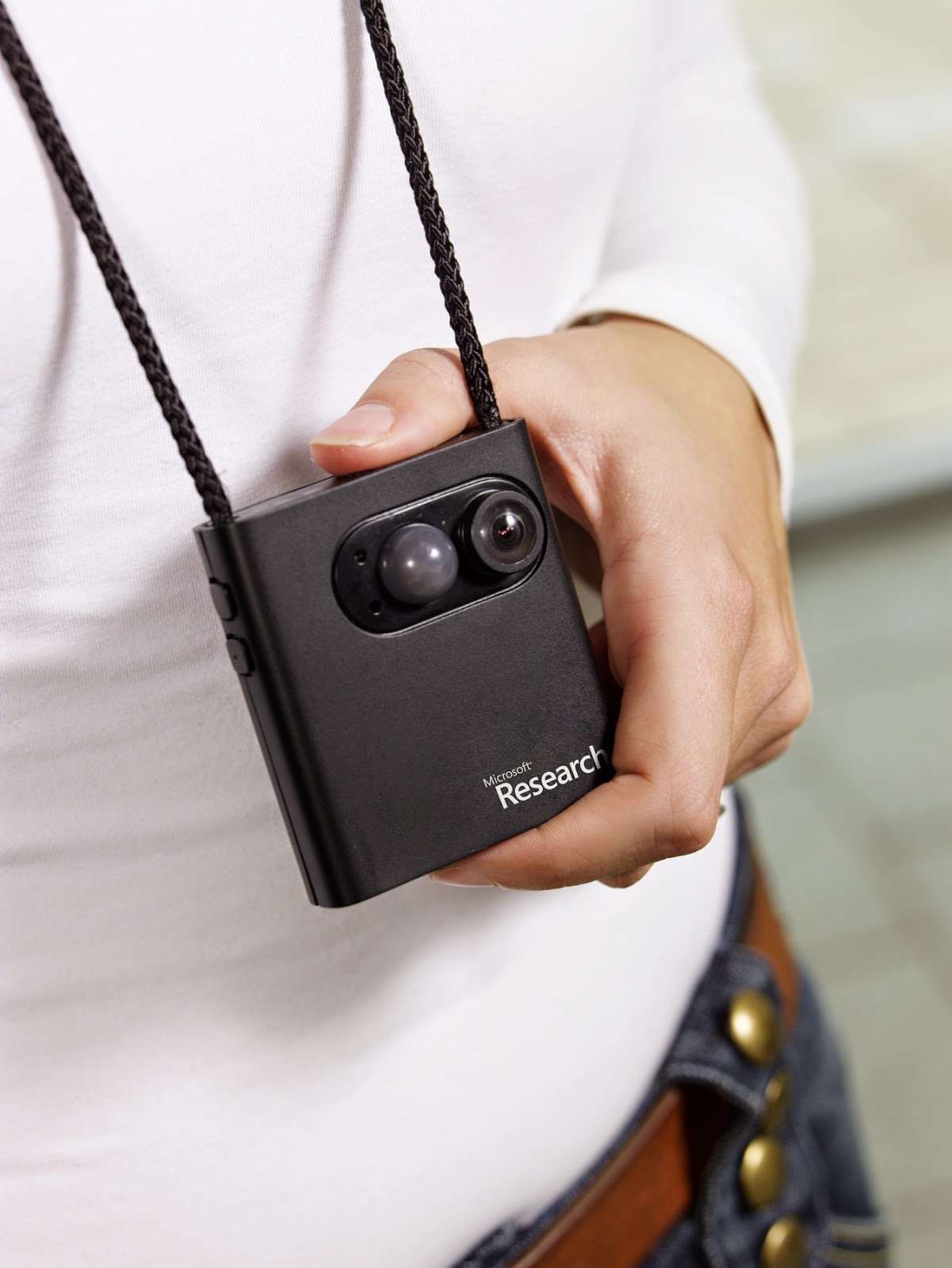
The only comment that comes to my mind about automated vision is 'Life Logging'  devices where an automatic camera you carry across your neck documents your life by taking a picture at intervals, according to some pre-programmed software and sensors, activated by differences in light and shadow. 
Later a computer program then assembles the separate instants or angles in something meaningful - that is very close to some ideas of Conceptual Art. 


Life Logging was originally a Microsoft Project in Cambridge, UK, for helping patients with Brain Injury to recover language and memory, but it also became an activity in itself. Total Recall you might dub it. 

As you see a lot has been put on the table. We have just began to unravel a paradox, that we must leave the details for the next episode.
Is it the end of photography? I hope not.

 I hope that you don't think I am over-intellectualizing. I think that Photography as Art and mass shooting are both a reality, so why avoid one for the other? 
One of the contentions above however is that machines are replacing the act of seeing, by their own.

I am hardly there. In my simple daily life in Rome which I keep documenting, starting from my multiethnic neighborhood, it as relatively simple to have the pulse of globalization by doing environmental portraits of my neighbors. As the local saying goes, you hardly see an Italian in the streets, or on busses now. All the easier then for me to give an image of Rome as a global city or better, a global village. In the future the population will be an ethnic mix, hybridizing cultural traditions, so why not start now to document the fusion?
I wonder often how my Chinese friends see Rome without my remaining ethno-religious filters. Perhaps Rome will be reborn like when it was Pagan and accepted people from all parts of the Empire with their Gods aka cultures? A polytheistic Rome.

A Chinese friend, by amalric.

And then, is it true that picture is replacing word? That was my assumption about Burroughs pictograms. Certainly we can exchange pics more easily than words across the continents.
Also, with hypertextual blogs such as this one we are watching the onset of this pictographic culture. Does a series of words and pictures related to each other by links and hyperlinks constitute a poem? I once published a Visual book with Poesia Visiva's Adriano Spatola, and that was certainly his assumption. Pictograms do replace words, and that is how the hieroglyphic first language was born in the heart of the Sahara desert, more than 5000 yrs. ago. 

The Swimmers' Cave, rock paintings in the Western Desert, by amalric. Messages about the presence of water were the first pictograms.

 'Nadja'  was only a first example of what could be achieved. It is a prose poem, not only for its links with the Unconscious but also in a formal way. Because words resonate in the pictures, and the pictures in words. This I would certainly like to explore further with your help.

Note

May I remind you that I welcome your contributions, both in words and pictures - especially in such wide ranging subjects? Please use the e-mail box to get in touch or to send material.  

Last, David Bate, forsees that Photography might evolve in the direction of a New Realism, even of Italian Neorealismo, which is certainly very close to my own photographical stance, therefore I wrote about poet and film maker PP Pasolini. Perhaps stepping back from overprocessing might be a first move. 

Sunday, 11 May 2014

The Blue Files

Although it happened by accident, I decided to keep the Artificial Light WB in daytime, and explore its potential.
As we know dogs and other animals see in different wavelengths from us, and so would a sentient being from another planet.

Villa Borghese Gardens, Rome. By amalric

HCB, would you buy a Leica T?


Of course I have no way to reach him in the other world, but I have read enough interviews to impersonate him on minor matters :)


Me : Bonjour Monsieur Cartier-Bresson, achèteriez vous le Leica T?

HCB: qu'est-que c'est ca?

Me : le dernier boitier électronique de chez Leica.

HCB: you can speak English, I understand you know

Me: the first small format fully electronic model from Leica
(I show him the movie about the aluminum ingot)


HCB: remarquable. And how does it work?

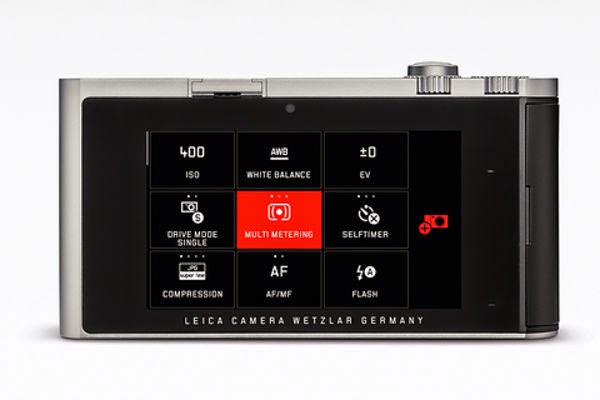
Me: Well it has a screen in the back, and two wheels on top. You choose the settings by touching them on the screen. And once the camera is set all you need is to choose the aperture, and the shutter speed on the wheels.


HCB: seems a bit slow, and where is the OVF? 

 Me: There is none, it's the screen.

HCB: formidable. Montrez moi ca! (He tears the camera from me)

Me: All the electronics are stuffed inside the brick from here, before sealing the screen. 

HCB: Vraiment? It's really small compared to my M3. 

HCB's first Leica


And it's expensive?

Me: € 1500

HCB: more or less what I paid my M3 in the 1950s, less the inflation. Can I use it with my lenses?

Me: Naturellement. There is a € 600 adapter, but there is a magnification factor of x1.5

HCB: Zut alors! That makes them basically useless!

Me: No trouble, you can buy a 35/f 2  in the native format here, or a 18-56/ f/3.5-5.6 zoom.


HCB: les zooms, je déteste. I can still walk you know. But how do you focus them without a RF, un télémètre?

Me: Oh, they do it by themselves. It's called Auto Focùs.
(I let him try it)

HCB: Not sure it's faster than my eye and my hand. Ah la Leica! (He looks like a giant owl eyeing a mouse)

Me: Leica will probably keep increasing speed by firmware.

HCB: Firmware? Qu'est-que c'est ca? (I try to explain. He looks unimpressed)

HCB: not really sure I get the decisive moment with that. As you know le Cardinal de Retz  disait: "Il n'y a rien dans ce monde qui n'ait un moment décisif" ("There is nothing in this world that does not have a decisive moment"). 

Me: never say never. BTW the lenses cost € 1600 and 1800 respectively.

HCB: Zut alors! Costs an arm and a leg! How is the resolution? I use Kodak Plus-X et Tri-X. Et  deux objectifs Leitz. Un 35 e un 50.

Me: Those better than me calculated that film cameras allowed a resolution of 12 Mpx to 16Mpx in the best of cases. 

Leica T is 16 Mpx, so you shouldn't notice any difference with film, rather the opposite, more sharpness. BTW you can also add un viseur éléctronique, an EVF for better targeting...

HCB: Ah, je disais quand meme,

Me: for another € 600

HCB. It's like going to the butcher's. They sell you the cow by pieces! Ca me fait une belle jambe!

Me: … But it works also like a satellite positioning of your shots.
Latitude et Longitude, you know?

HCB: you can't stop progress of course, but I am not sure I want to reveal my watering holes to the layman.

Me: you can tag even an elephant you know?

HCB: for somebody else to kill it? Tsk, tsk…Ca me fait une belle jambe!

Me: Other than this , it connects to your portable.

HCB: I have no portable in Paradise, we communicate by brainwaves, far more practical. But even if I had one?

Me: that is the revolutionary part: it sends automatically the shots to social medias, or to your newspaper. Even if you are in Africa.

HCB: marvelous, but we have no newspapers in Paradise, it all goes through brainwaves, you know. 
BTW it's getting sticky on Earth at the moment, is it?  Killings in Ukraine, girls abducted in  Nigeria... It reminds me when I went to India for Ghandi's funeral - they killed each other by the millions you know - between Hindus and Moslems. None went to Paradise.

Me: so would you buy  le Leica T?

HCB: not sure, it looks more clumsy than my M3, but OTH she is such a sweet petite. You think they'll make it in black?


Me: Yes, absolutely. There it is, with its viewfinder,  called a Visoflex, like the old reflex contraption.

HCB: Visoflex my foot, that's an ugly bout.

OTH such a petite I could use to snap Woytila, and John XXIII, our new Saints, without their taking notice.  Their PR are calling me, allow me to leave, Monsieur, I have a job to do...

(he fades away)

There are a lot of previews, but no decisive tests yet. 
Let's say that the Leica T is in the ballpark of the Vario X, which was quite good without being overly reactive. It surely is a lovely object to own, even at moderate prices for Leica, and so it has reached the Top Ten in many sites.

There's one glitch though. At those prices everybody believed that the lenses would have no electronic correction.

It was noticed by DPR when  downloading the DNG files with two separate programs, one honoring corrections and the other not. By comparing them they concluded  Leica used software correction after all.

No optical perfection - shame and grinding of teeth :) 
Truth is that to keep the lenses small  firmware correction is needed, because of the short register.

Leica is no exception, and after all they warned that the lenses are made in Japan. In fact the new Leica is very similar to other mirrorless small format. The real difference is in the build, the haptics, and the reductionist approach in the menus.

Some call it the Apple of the Leicas.
Not a pyramid of features, but only what the user strictly needs before the shot.

 Lots of things to copy there for the other makers. Olympus take note, your menus need to be revamped, towards the same simplicity. HCB is here with me.

Now the best reviews I found, straight from the horse's mouth

* Review by Red Dot Forum
* Review by Jono Slack
* By Luminous Landscape


Meanwhile witty Leica Apostate (J. Shin) did a review of sorts about the sanding of the Aluminium block

"Giving new meaning to the phrase "manual labor". More captivating than a cat video! I mean, it's 5 am, and I'm actually watching the whole thing!
And now we know why it's $1850, not $1800.
I wanna know how he talked his boss into letting him get paid to do this. Who is his agent?
Can you imagine the ad for the job? "Must have the ability to discern minute irregularities on brushed aluminum surface."
And who is the cinematographer? What patience!
At 10:35, he actually uses a sander. [added later: the only time he does it!] You can hear someone else using something mechanical in the room.
Notice how he has to hold the sandpaper in place. No shortcuts at all.
14:48 The gloves are on! There is water! OK. That's another $50.
Imagine if he messes up one stroke. Or gouges out the lens opening. Back to the start with a 1.2 kg block of aluminum.
I mean, Leica's taking this "jewel" business seriously, aren't they. I'm thoroughly impressed.
Can we just pay him the $1850, not Dr. Kaufmann?
In the US, if a woman did the polishing, it would be worth only $1480. $1665 if she is not on "mommy track". How is wage parity in Germany?"

(The rest is here)

Would I buy it? If I had the money, surely. Just for the sake of caressing sensuously her beautiful anodized (?) body. I'd call her Titania, like in Shakespeare.

However it would still not replace my middle class Olympus E-M5. It has buttons and wheels and also a touch screen, but I never use it, you can't teach an old dog new tricks, they say.

 And the Leica T doesn't have a built in viewfinder, a must, according to me. They say that at Wetzlar, where they sand the body, they couldn't resist to build the Leica T in one block, and so the hump for the EVF had to go.


Monday, 5 May 2014

Francesca Woodman, on being an Angel


In forums, when not classified by camera model, users are presented with genres, like Landscape, Portrait, etc. That is how camera users see Photography, with documentation as the general category. We are just recording things for future memory.

Of course there is also a third way, to see it historically: Naturalism, Realism, Avant-Garde, Conceptual, Globalization. You might refine it, or adopt another sequence. Surrealism sprang out of the Avant-Garde beginning of the 1920s in Paris and had a remarkable long life, moving to America and New York in 1940 and lasting till the 1970s, with F. Woodman as one of its last heralds. 

Meanwhile Photography  had entered the MOMA in NY and had become an art.
When I began to approach critically Woodman's work, I was struck by the lack of awareness shown by the first reviews. Essentially she was dubbed a feminist, or at best a body artist, who had died in turbulent times. They had missed her seminal Italian year, when she bloomed from art pupil to full blown artist. The fact that she reached her accomplishment here in Rome at 18een, while dying at 21 in NY didn't make things easier.


It was only years later that criticism began a more refined approach. Meanwhile she had reached somehow cult status, both in the US and Italy, being dubbed the 'Rimbaud' of Photography. This put her indirectly in the Surrealist sphere, Rimbaud having been among the main inspirers of Breton and comrades. Woodman has stated explicitly her admiration of Breton's 'Nadja'.

Woodman is reported as saying "Vorrei che le parole avessero con le mie immagini lo stesso rapporto che le fotografie hanno con il testo in Nadja di André Breton" ("I would like words to have the same relationship with my images as the photographs have with the text in Nadja by André Breton").

 But among her influences there was also surrealist photogs. Duane Michals, Diane Tuberville, and the Man Ray of the Meret Oppenheim's pictures. Delving even earlier she was inspired by Gothic Fiction, Roman Baroque and Bernini's statues. Some of her studies on compressed perspective remind very much of Giotto. She might have seem him during her yearly holidays as a child near Florence. Giotto invented perspective, what luck for a future photographer to get it from the horse's mouth.

Francesca began her activity v. early at 13, spending  her time at the Rhode Island School of Design (RISD). She was also immersed in Italian art every summer by her parents, both artists, and she spent her second year of primary school in Italy, until she reached Rome with her RISD grant for 1977-78.

It's at the Libreria Maldoror, a minuscule Surrealist bookshop in the heart of Medieval Rome, where she had her first show, that I must have crossed her. Nearby the wonderful Baroque Piazza Navona   you could both find Maldoror, the occupied building of the 'femministe' (Women Liberation Front) , and the second hand shops where she chose her neorealist clothes. I remember that the slogan with those ladies was: 'Il corpo e' mio e me lo gestisco io'- the body is mine and I will Take care of it". A program that Francesca was going to adopt entirely, by being her favorite model.


She was also inspired by the Italian conceptual artists at Galleria Ferranti,  nearby Maldoror, and later Postavantgarde painters who let her use one of the large rooms in an abandoned Factory. Thus, she got in touch with Sabina Mirri (painter), Edith Schloss (poet), Giuseppe Gallo (painter) , Enrico Luzzi and Suzanne Santoro. I was acquainted with the first three, all remarkable young artists at the time.

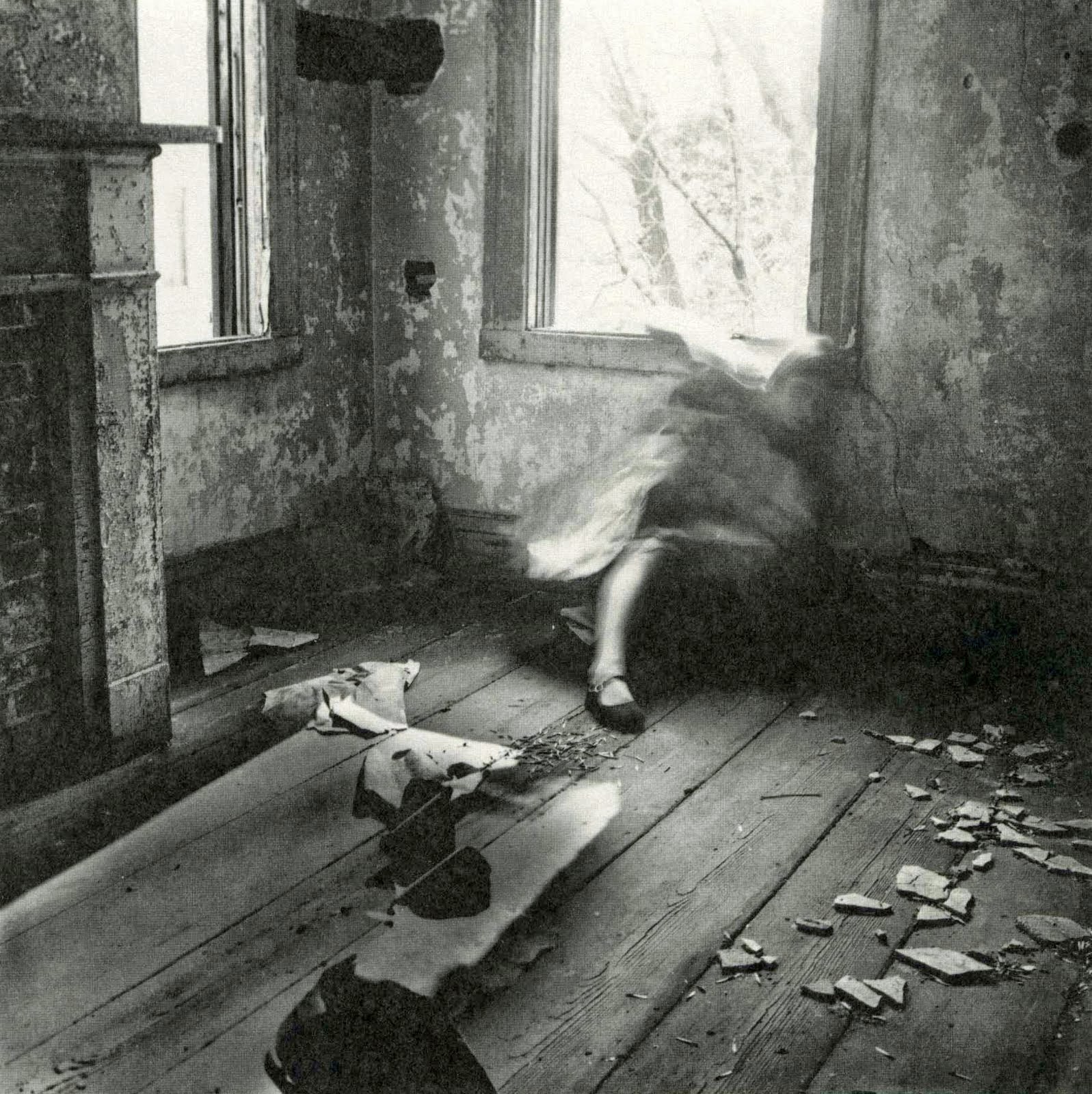
 In the factory at S. Lorenzo she shot  her seminal 'On being an Angel' work in Rome, when just 18. A whole constellation of influences was in place, but nevertheless her work was far more original than her critics initially made it after her death in 1981, when she wasn't there anymore to correct their hits and misses about her. She could be a cultured artist and yet deceptively simple too, playing a Victorian innocent maid, a clever child the way Charles Liddel's Alice was. 

The only Art Book  she made in her short life was 'Some Disordered Interior Geometries' appeared in 1981, a few days before her death. Her parents have given access to only 700 pictures, all outstanding but her estimated production from 13 to 22 has been estimated to 10,000.  Even given for granted that a photographer must always select his/her work, we know therefore a v. little part of her work. Her work is kept by the Woodman Estate. Some 170 are being sold through galleries. The known production therefore poses a problem.

The majority of her pictures are from contact sheets of 6x6 cameras, notably an old Speed Graphic, and a Rolleiflex. The SG allows multiple formats too.

The contact shots being v. small and square confer both intimacy and a confined  space to the subject - only in her later years she planned an installation of large photographs, an installation simulating the friezes of a Greek Temple).
I related in a first post how I was sent an illustrated invitation, by her. I could make out a square with a naked body exposed to the full sunshine  from a factory window. And this reminded me later of Bernini, The Ecstasy of Santa Teresa, in Rome. Did she see it, or was it a personal rediscovery of how to tell pictorially a female orgasm?


An invitation sent to me: therefore I feel authorised to use images here for learning purposes.

Religious and sexual drives have one and the same origin  according to Bataille and other French Surrealists working towards Convulsive Beauty and a new History of Eroticism. Thus there is a common iconography across cultures. There are also common interdicts.

Without stating it so explicitly Freud posited it with its fundamental enquiry on dreams and the incest complex, when the child goes through a mirror experience because of the denial of his sexual drive, towards the mother or the  father. His Ego doubles and splits, in order  to avoid what Lacan will call 'The Thing' - the forbidden one.

The theme of mirrors and splitting is omnipresent in Francesca.
Hysteria was also part of the constellation, and was the main study at the Salpétrière hospital where Breton had been a nurse: were transe, orgasm, and religious ecstasy one and the same thing? Breton took an interest, because he believed that the sublimation of the sexual drive would have made art revolutionary: 'la Beaute' sera convulsive ou ne sera pas'.

By visiting each Summer Florence and her public Renaissance Gallerie, Uffizi and Pitti, Francesca must have been well aware that an excess of light was akin to the visitation of an Angel, and the total awareness of the artist, visited by inspiration. Nakedness in the Renaissance was also a metaphor of truth.

As Dr. Eva Rus remarks in her paper, the theme of the mirror is indeed omnipresent both in the work of F Woodman and other Female Liberation's authors. It is a theme that both frees the body and protects it with mirrored, multiple identities. It can also encage however.

In Feminist parlance, by exposing her naked body to a mirror, she re-appropriates it. She echoes male desire, but she also detaches herself from it.
Both David Bate and Eva Rus have discussed the implications of this important theme. It is a counter to the paradox that Breton and he early  Surrealists  had come against with their theories about Woman and sexuality, both a Goddess and a public woman, with Sadism and Courteous Love taken in the same stride.
Rus mentions that by her work,  Francesca was speaking for women, not just for a woman, playing with male desire, but not ending in it, exploring instead womens' sexuality, and identity down to the unspeakable, and the excessive (Rus). 


One's own shadow, duplication, wish to disappear, and condensation of dream figures are all part of the Surrealist imaginary, suggested by Freud. You can all find them in Francesca's figures. She played with the whole range of the Freudian symptoms to reenact myths. So we go from the passive interpretation of the unconscious drive by the early surrealists a' la Nadja, to active impersonation of dream figures by Francesca - the mark of genius! 
In some pictures one wonders if turning rapidly about herself she didn't achieve a trance like a dervish, and disappearance into space - blending the frame and the object in another dimension.

Despite the excess, let me remind that Francesca has aptly described her work as solving visual ideas as if they were equations 

 "I had this idea to illustrate physically literary metaphors  and to make physical metaphors for moral ideas (the reputation). However by working slowly at other projects, I lost the peculiarity of this idea and I came out with a group of images that didn't illustrate any specific concept, but are the story of someone who is exploring an idea […] Let's  follow a figure who tries to solve the idea as if it were a mathematic problem, and to fit it inside an equation. Two months later […] I was back to the original theory for illustrating 'Self-deceit' […] the thing that I found most interesting was the feeling that the figure, more than hiding from itself, was absorbed by a thick and humid atmosphere".

Do you understand the description? Visual artists are often deceptively simple, but they cannot explain what they choose to illustrate in another way.  This is how I basically see her work, since at the time I was a performer myself. First you empty the scene, the physical space around you and in your mind. Then you begin testing visual hypotheses in this virtual space. You use chance associations, even dreams  to suggest the solution, how things must fit spatially.
In Self-Deceit the object of the camera, the model, literally navigates between two mirrors, the second being the camera, and in  this virtual space it becomes again a subject - with multiple directions and identities it can choose from.

The camera however is not only a mirror but a a perspective machine.  For Francesca thus the problem, as for every photog, must have been to fit a 3D space in the bidimensional plane, and in her medium format a  6x6 square at that. 
In some shots her caged body  acts to as the bridge between the illusory three dimensions of the perspective and the plane of the photo. Often the frame beheads her, as in the first picture, and here:


It immediately reminded me of the problem faced by Francis Bacon, when fitting a soft blob of a body, a monster inside a perspective cube, drawn with sharp lines, cutting as blades.

Francesca could do the same by fitting a mirror at the end of the frame and by moving rapidly in front of the objective with slow shutter speeds.  "Me and Francis Bacon and all those Baroques are all concerned with making something soft wiggle and snake around a hard architectural outline." So I wasn't wrong after all.


Again, did she use the rapid movement just to disappear, or to achieve some sort of transference through the looking glass, like Alice?

Let me end here with one of her most interesting pictures, where she transforms herself like Daphne  into  a tree, in a pond in Providence, USA. You can easily compare it to Bernini's work, which Francesca must have seen while in Rome.


In symbolic terms the scene is interpreted as the nymph transforming herself into a tree, to flee a rape by Apollo. It might also be interpreted as another metaphor of desire imagined by Bernini, where woman becomes again unconstricted nature, to escape male desire. Is that what Francesca had in mind with her Providence surprising picture? Or did she want to be"absorbed by a thick and humid atmosphere" and disappear in a protective womb?

Besides the psychological interpretation, as photogs. we might wonder how Woodman solved the technical problems. Where did she place her Speedgraphic, in the water, on a tripod? Did she frame exactly the roots under which she would then have placed her naked body like Daphne? Did she use flash lights? What a fascinating way to work, for a girl who was just 18, and yet already so mature.

So we know a few things now about Francesca's very original  approach to photo work, but in the next instalment I would like to explore better her symbolic world with Dr. Eva Rus from the U. of Birmingham. I found it to be a most fitting paper about Woodman,  after I read so many mundane comments that missed the artist, and only described the woman.

Francesca went so deep in her photographic performances and metaphors that it is difficult to imagine anyone as her successor - although she has many imitators.  Perhaps that explains too her cryptic statement before she took her life. She was really an angel who departed before people took notice of her, except a few fellow-artists.

"I have parameters and my life at this point is similar to the sediments of an old cup of coffee, and I would rather die young, preserving what has been done, instead of confusedly rubbing out all these delicate things,

She threw herself from a skyscraper in NY,  after a long depression, insufficiently cured by analysis, allegedly because of a grant application having been rejected.  

Others mentioned she had wanted to become a Fashion Photographer, like her admired Tuberville. Perhaps Vogue rejected her? -  an issue complicated by problems with her boyfriend.

My next enquiry would rather be if in her 'descente aux enfers', descent into hell, she had not rather reached something monstrous, a figure of the unconscious which was unbearable, like those wrathful deities that Tibetan Buddhism tries to exorcise and exalt at the same time. This was the monster in 'Yet another leaden sky':


  Francesca could use elegant metaphors, like the momentous arrival of a turtle in a room. Her double hides from it, and  is literally cornered by the monster in a shortened perspective, and as a result it loses its face. It wears the black veils of melancoly. It is an emblem that needs to be decoded, and yet keeps a high degree of ambiguity.

Notes:

1. I have avoided nudity, which is difficult with F. Woodman, to respect the guidelines set by my tentative sponsors, Amazon and Google. On another plane, belonging to the same generation of Francesca, we can both have a (sad) laugh at it. By a paradox you can see all the pictures of her lovely body, by doing a Google search :)

2. I propose you to solve an enigma. Because of her short life, and because she worked with film (120 format mostly) I cannot be sure if we see now her actual prints, or negatives that were printed by the Woodman Estate. This would also tell us how much she postprocessed in a film darkroom.
My impression is that she did just contact sheets, and solved all the problems before pushing the shutter button. That is, she used slow shutter and double exposure to achieve her disappearing acts. The S. Lorenzo lofts with big industrial windows would have offered all the natural light she needed.
Keep in mind that I have somewhat enlarged the original 6x6 size to better analyze the details. In the 'Daphne' shot, the contour  of the tree seems to have been relighted, since it has a kind of otherwordly glow. Relighting however was standard processing in film times.

3. The bare facts of her life by Wikipedia